Stamped Concrete vs Pavers: Which Is Better for Your Driveway or Patio
If you are trying to decide between stamped concrete and pavers, you are probably looking at two quotes, two very different price points, and a lot of conflicting opinions depending on who you ask.
Here is the honest version from a contractor who installs both.
Here is the honest version from a contractor who installs both.
Both are legitimate options. Both look good when done right. But for most Stockton homeowners choosing between the two for a driveway or patio, there is a clear answer once you understand what actually separates them in terms of cost, durability, maintenance, and long-term performance in this specific climate.
What Is Stamped Concrete?
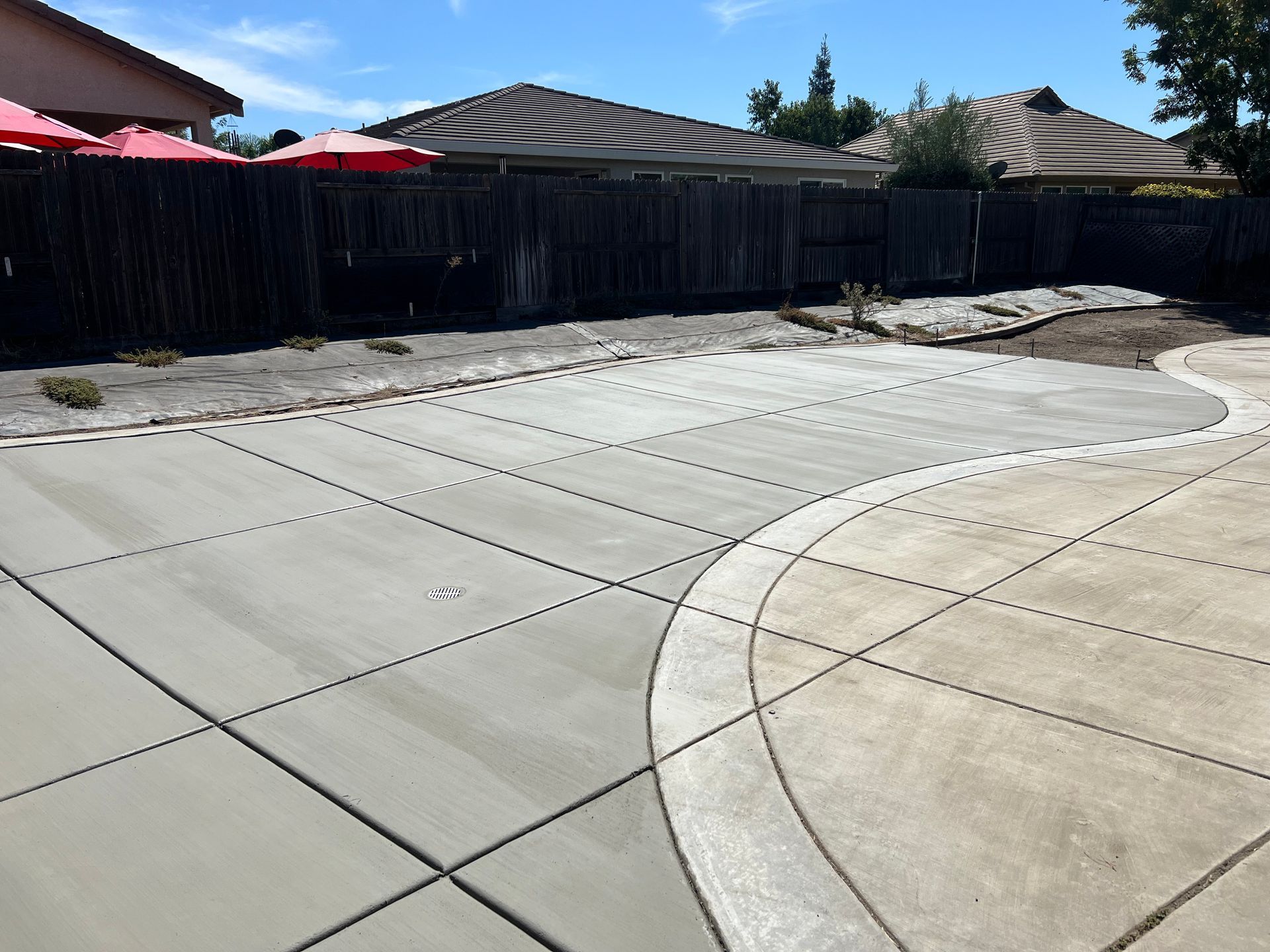
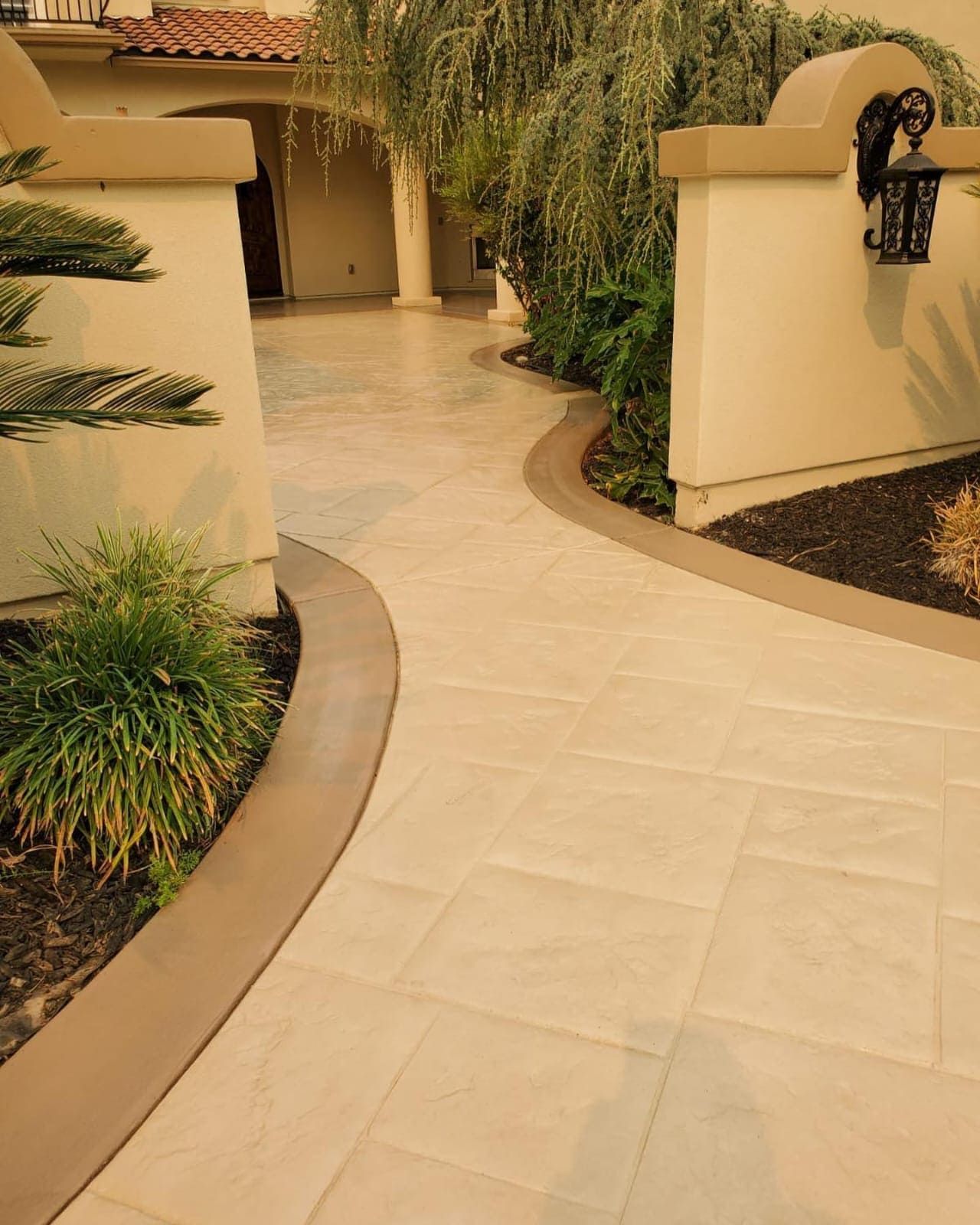
Stamped concrete is poured as a standard concrete slab and then imprinted with patterns and textures while the concrete is still workable. Color is added either integrally through the mix or applied as a surface hardener during the pour. A sealer is applied after curing to protect the surface and bring out the color.
The result looks like brick, slate, flagstone, cobblestone, or a range of other textures, without the individual pieces, the gaps, or the installation complexity that comes with them.
What Are Pavers?
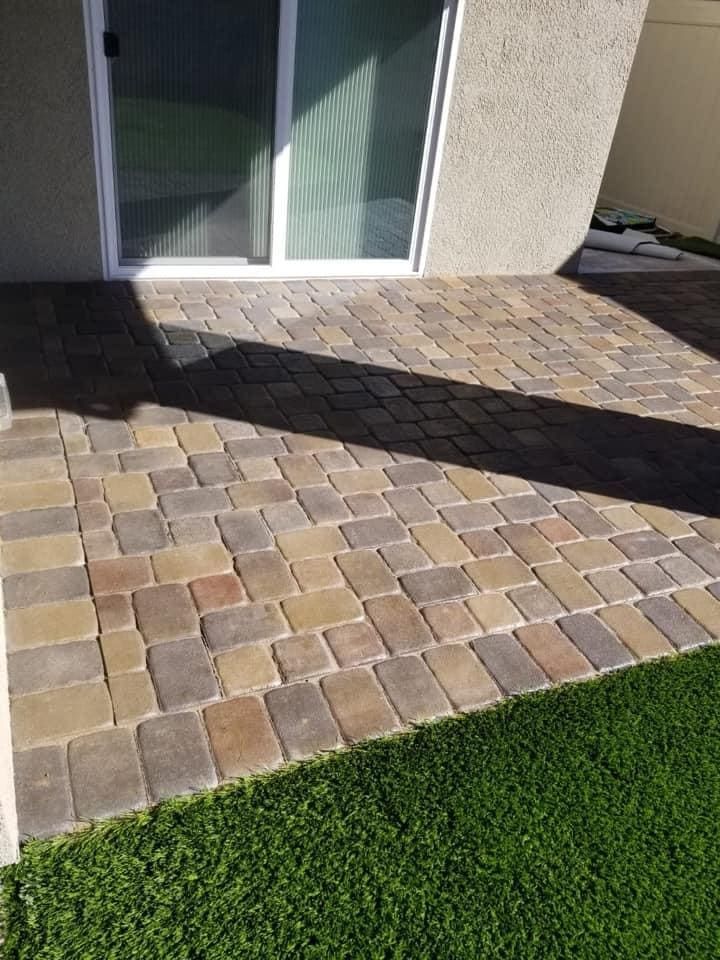
Pavers are individual units, brick, concrete, or natural stone, set on a prepared base of compacted aggregate and sand. They interlock or are set in a pattern, with joints between them filled with sand or polymeric sand to hold everything in place.
Because they are individual pieces, they can be removed and reset. That is the core functional difference between the two options.
The Real Differences That Matter
Cost
Stamped concrete is consistently less expensive than pavers for the same square footage, usually by a meaningful margin. The exact difference depends on the paver material being compared, basic concrete pavers versus natural stone versus high-end travertine, but for a comparable installation, stamped concrete will typically come in lower.
This is approximate and varies by project, so verify with your actual quotes. Go verify current pricing in your area.
For homeowners working within a budget, this difference alone often makes the decision. For those comparing stamped concrete to basic concrete pavers specifically, the gap narrows but stamped concrete still typically comes out ahead.
Appearance
Both look good. This is genuinely a matter of preference.
Stamped concrete gives you a uniform, continuous surface with consistent color and pattern. It looks intentional and clean. It reads as a single cohesive element in your yard or driveway.
Pavers give you the look of individual units, the slight variation between pieces, the texture of the joints, and a more traditional or old-world feel depending on the material. Some homeowners specifically want that look, and pavers deliver it more authentically than stamped concrete does.
If visual authenticity of a specific material is the priority, pavers. If you want a high-end decorative surface at a lower cost with a cleaner visual line, stamped concrete.
Maintenance
This is where stamped concrete and pavers genuinely diverge, and it is important to be honest about both.
- Stamped concrete maintenance: Stamped concrete needs to be resealed periodically, typically every two to three years depending on traffic, sun exposure, and how the original sealer holds up. In Stockton's heat, sealer breakdown can happen on the faster end of that range. Resealing is not expensive or complicated, but it is a recurring maintenance task. Skipping it leads to fading, surface wear, and eventually penetration of water and staining.
- Paver maintenance: Pavers require periodic joint sand replenishment as the sand settles or washes out over time. Weeds can grow in the joints if they are not maintained or if polymeric sand was not used. Individual pavers can shift, especially at edges, if the base was not built correctly. In clay-heavy soil like much of Stockton's, some movement over time is common.
For most homeowners, resealing stamped concrete every few years is simpler and less ongoing than managing paver joints, weed intrusion, and edge shifting. But both require maintenance. Neither is maintenance-free.
Repairability
This is the one area where pavers have a clear, honest advantage over stamped concrete.
If a paver cracks, shifts, or gets damaged, you pull that piece and replace it. If you saved extra pavers from the original installation, the repair can be nearly invisible. The individual unit system is inherently repairable.
Stamped concrete is a single continuous slab. If it cracks, repairs are visible. Matching the original color and pattern after a repair is difficult, and in some cases impossible depending on how much the original surface has aged. Cracks in stamped concrete do not compromise the structural integrity of the slab in most cases, but they are cosmetically permanent in a way that paver damage is not.
This matters most if you are risk-averse about appearance or if you have a situation, heavy vehicle traffic, expansive clay soil, or large tree roots nearby, that creates higher likelihood of cracking.
Durability in Stockton's Climate
Both materials handle the Central Valley climate reasonably well when installed correctly. The bigger variable is the installation itself, specifically base preparation, rather than the material choice.
Clay soil, which is common throughout San Joaquin County, expands when wet and contracts when dry. That cycle puts stress on any surface placed on top of it. Proper base compaction and, in the case of concrete, proper slab thickness and reinforcement, are what determine how well either surface holds up over 10 to 20 years.
A correctly installed stamped concrete slab in Stockton's climate will outlast a poorly installed paver job, and vice versa. The material matters less than the installation quality underneath it.
Lifespan
Both materials, when properly installed and maintained, have a long lifespan. Stamped concrete typically lasts 25 or more years before significant surface wear becomes an issue. Pavers are similar in structural terms, though joint and edge maintenance affects their appearance over time more noticeably than a well-sealed concrete surface.
Side-by-Side Comparison
Which One Is Right for Your Driveway?
For driveways, stamped concrete has a practical advantage beyond just cost. A driveway carries repeated vehicle loads, and stamped concrete as a unified reinforced slab distributes that load more evenly than individual pavers set in sand. Over time, pavers in a driveway can shift at entry and exit points where vehicles repeatedly load and unload the surface. This is manageable with maintenance but is a real consideration.
If your driveway will regularly carry heavy vehicles, full-size trucks, RVs, or trailers, stamped concrete on a properly reinforced slab is a more structurally consistent choice.
If the driveway is light-duty and you specifically want the look and repairability of pavers, pavers are a legitimate choice with that trade-off in mind.
Which One Is Right for Your Patio?
For patios, the choice comes down more to aesthetics and personal preference, since load considerations are far less significant than on a driveway.
Stamped concrete gives you a seamless surface that is easy to place furniture on, does not have joint gaps that chair legs catch, and can be designed as part of a larger continuous concrete space that includes walkways or driveway aprons.
Pavers give you more flexibility to incorporate curves, level changes, or a more traditional material look. They also allow sections to be pulled and reset if irrigation lines, drainage, or other underground work ever needs to be done.
Both are strong patio options. The honest answer here is that it depends on what the space looks like and how you plan to use it.
Our Recommendation for Most Stockton Homeowners
For most residential driveways and patios in the Stockton area, stamped concrete is the better value. It costs less upfront, requires straightforward periodic maintenance, and performs well in the Central Valley's soil and climate conditions when it is installed correctly.
The one situation where we recommend pavers over stamped concrete is when repairability is a high priority and there are specific conditions, nearby tree roots, known drainage issues, or very heavy vehicle use, that create a higher-than-normal risk of surface damage.
We install both. We are not going to push you toward stamped concrete if pavers are actually the right call for your project. But for the majority of homeowners we work with in Stockton, Manteca, Tracy, and the surrounding area, stamped concrete delivers a better outcome at a lower cost.
Get a Stamped Concrete Estimate in Stockton
If you are comparing quotes and trying to figure out which direction makes sense for your specific project, we can walk you through both options for your driveway or patio and give you a straight answer based on what we actually see on your property.
Call us at (209) 871-8110 or request a free estimate online.
We serve Stockton, Manteca, Tracy, Lodi, Lathrop, and surrounding communities throughout San Joaquin County.
Frequently Asked Questions
-
Is stamped concrete cheaper than pavers?
Yes, in most cases stamped concrete costs less per square foot than pavers for a comparable installation. The exact difference depends on the type of paver being compared, basic concrete pavers versus natural stone versus travertine, but stamped concrete typically comes in lower for the same coverage area. This is approximate and will vary by project and current material pricing, so compare actual quotes before deciding.
-
Which lasts longer, stamped concrete or pavers?
Both have comparable lifespans when properly installed and maintained, typically 25 years or more. The bigger factor in longevity is the quality of the base preparation underneath either surface, not the material itself. Poorly installed pavers on an inadequate base will fail faster than well-installed stamped concrete, and vice versa.
-
Can stamped concrete crack?
Yes. Concrete cracks, and stamped concrete is no exception. Control joints are cut into slabs to manage where cracking occurs, but surface cracks can still happen, particularly in areas with expansive clay soil or heavy loads. Unlike pavers, cracked stamped concrete is difficult to repair invisibly. This is the primary advantage pavers have over stamped concrete.
-
Do pavers require more maintenance than stamped concrete?
They require different maintenance, not necessarily more. Pavers need periodic joint sand replenishment, weed control in joints, and monitoring of edge stability over time. Stamped concrete needs resealing every two to three years. For most homeowners, resealing on a schedule is simpler than managing ongoing joint and edge maintenance, but this is a personal preference factor.
-
Which is better for a driveway, stamped concrete or pavers?
For most residential driveways, stamped concrete is the stronger structural choice. A unified reinforced slab distributes vehicle loads more evenly than individual units set in sand, and heavy or repeated loads are less likely to cause shifting in a concrete slab than in a paver installation. Pavers are a legitimate driveway choice but require more ongoing maintenance to stay even and stable under consistent vehicle traffic.
-
Which is better for a patio, stamped concrete or pavers?
Both are strong patio options since load-bearing is less of a factor than on a driveway. The choice comes down to aesthetics, whether you prefer the seamless look of stamped concrete or the traditional material look of pavers, and practical factors like whether you anticipate needing to access anything under the surface in the future.
-
Does Drago Inc. install both stamped concrete and pavers?
Yes, we install both. Our primary specialty is stamped and decorative concrete, but we do paver work as well. We will tell you honestly which option makes more sense for your specific project rather than defaulting to one or the other.
Drago Inc. is a licensed (CSLB #1017023) and insured concrete contractor serving Stockton, Manteca, Tracy, Lodi, Lathrop, and surrounding San Joaquin County communities since 2016. Learn more about our concrete patio services or contact us for a free estimate.
Share Now!