Best Backyard Ideas with Turf and Concrete in Stockton
Most Stockton backyards start the same way: a concrete slab near the house, a stretch of struggling grass, and a fence. It is functional. It is not a space anyone actually wants to spend time in.
The best backyard upgrades we build combine two materials that complement each other better than almost anything else: concrete and turf.
Concrete gives you structure, hardscape, and surface you can build on. Turf gives you green, softness, and low maintenance without the water bill or the dead patches that come with natural grass in the Central Valley heat.
Here are five real ideas from projects we have built in the Stockton area, each one a different way to use both materials together depending on your yard size, budget, and how you actually use your outdoor space.
List of Services
-
Idea 1: Stamped Concrete Patio with a Natural Grass or Turf BorderItem Link List Item 1
Best for: Homeowners who want a standout patio without losing all the green in their backyard.
One of our most common backyard combinations is a stamped concrete patio or walkway paired with grass on one or both sides. In one project we completed locally, we built a large stamped concrete patio and connecting walkway in a warm terracotta tone alongside a natural grass area on the right side of the yard. The contrast between the textured concrete and the green lawn created a clean visual separation between the entertaining space and the open yard.
The stamped finish does the heavy lifting here aesthetically. Instead of a plain gray slab, the patio becomes a design element in its own right, something that looks intentional rather than like a leftover construction detail.
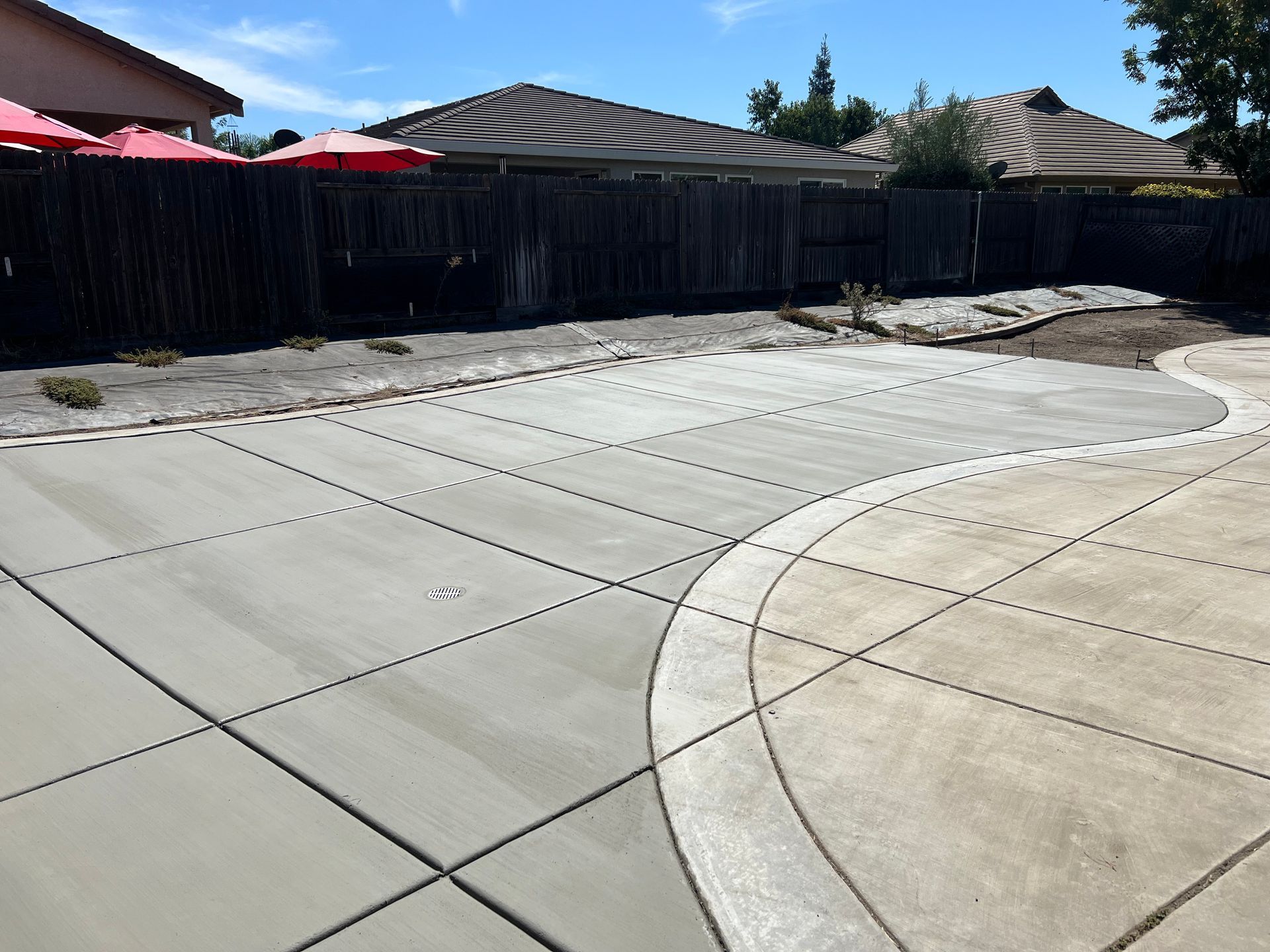
This layout works especially well for larger backyards where you want a defined outdoor living area but do not want to pave over the entire yard. The concrete gives you a dry, stable surface for furniture, grills, and foot traffic. The grass or turf on the perimeter softens the space and keeps it from feeling like a parking lot.
What to consider: Stamped concrete should be sealed every two to three years to maintain color and surface protection in Stockton's heat. If you are pairing it with natural grass, keep irrigation away from the concrete edges to avoid long-term water intrusion at the slab border.
-
Idea 2: Full Turf Patio with Concrete Stepping Stones or PaversItem Link List Item 2
Best for: Homeowners who want a soft, green backyard with defined pathways that hold up to foot traffic.
Not every outdoor space needs a full concrete slab. In one project we built, the homeowner wanted a lush, fully green backyard without the water and maintenance demands of natural grass. We installed artificial turf wall to wall across the backyard and set concrete stepping blocks at regular intervals to create a clean, defined path through the space.
The result looks like a well-designed garden rather than a construction project. The concrete blocks give you solid footing so you are not compressing the turf with every step in the same spot. They also visually break up the turf in a way that adds structure without taking away from the green, open feel of the yard.
This approach works particularly well for smaller backyards where a full concrete patio would feel heavy or overwhelming, or for side yards where you need a functional path without sacrificing the appearance of the space.
What to consider: Concrete stepping blocks set in turf should be installed on a stable, compacted base so they do not shift or sink over time. Spacing matters for usability: blocks set too far apart feel awkward to walk on. We typically set them at a natural walking stride, roughly 18 to 24 inches center to center depending on the path width and intended use.
-
Idea 3: Turf and Concrete Around a PoolItem Link List Item 3
Best for: Pool owners who are done fighting with grass, algae, and muddy feet near the water.
Pool surrounds are one of the strongest use cases for combining turf and concrete, and one we have built several times in the Stockton area. In one project, we installed a concrete slab around the pool perimeter for the wet zone directly adjacent to the water, then transitioned to artificial turf for the rest of the backyard landscaping surrounding the pool area.
The logic is straightforward: the concrete handles the wet zone where foot traffic is heaviest and where bare feet need a slip-resistant, easy-to-clean surface. The turf handles everything beyond the immediate pool edge, giving the yard a resort-style green finish without the irrigation demands or the dead grass patches that are almost inevitable in a yard that sees pool splash and heavy foot traffic all summer.
Compared to doing the entire pool surround in concrete, this approach is warmer underfoot, softer for kids running around the pool, and far more visually interesting than a continuous expanse of gray slab.
What to consider: Drainage is the critical factor in this layout. Turf near a pool needs a base built to drain pool water efficiently so it does not pool on the surface or create mud beneath the turf backing. This is a detail that gets skipped on cheaper installs and creates problems within the first season. Get specifics from any contractor on how the drainage layer under the turf is built before you sign anything.
Ready to see what your backyard could look like? We build turf and concrete backyard combinations throughout Stockton, Manteca, Tracy, Lodi, and surrounding areas. Call us at
(209) 871-8110 or
request a free estimate online and we will walk your property and show you what is possible.
List of Services
-
Idea 4: Concrete Patio with Outdoor Kitchen and Turf SurroundItem Link
Best for: Homeowners who want a full outdoor living space that functions as a second living room.
This is the highest-investment layout on this list and also the one with the most dramatic before-and-after result. In a project we completed locally, we built a concrete patio as the main hardscape foundation, incorporated concrete stepping slabs throughout the yard, installed an outdoor kitchen as the centerpiece of the entertaining area, and surrounded the entire setup with artificial turf to complete the landscaping.
The concrete patio is what makes an outdoor kitchen functional. You need a level, stable, weather-resistant surface for the structure itself and for the foot traffic that surrounds it. Turf fills in the rest of the yard around the hardscape, so the entire backyard becomes a cohesive space rather than a patio sitting in the middle of a yard that has not been touched.
This layout makes the most sense if you entertain regularly, if you want a backyard that functions the way an indoor living and kitchen space does, or if you are planning to be in your home long enough to get full value from the investment. It is also one of the strongest returns on investment in terms of what outdoor upgrades do for home value in the current market.
What to consider: Outdoor kitchens require planning for utilities, gas lines, electrical, and sometimes plumbing before the concrete is poured. The order of operations matters here. Utility rough-in has to happen before the slab goes down. If you are thinking about an outdoor kitchen as part of a backyard project, bring it up at the estimate stage so the concrete work is designed around it from the start rather than retrofitted after the fact.
-
Idea 5: Concrete Patio with Turf Borders and EdgesItem Link
Best for: Homeowners who want a clean, modern look where the patio flows into the yard without a hard edge.
One of the most visually effective and relatively straightforward backyard combinations is a standard or decorative concrete patio with artificial turf running along the edges and borders. In one project we built, the patio sits as the central hardscape with turf edging the perimeter on two or three sides, creating a framed look where the concrete and the green interact along a clean, intentional border.
This approach works well because it softens what would otherwise be a hard edge between the concrete slab and the fence or surrounding yard. Instead of a concrete pad that stops abruptly at a wood fence or a strip of dirt, the turf creates a finished border that makes the entire backyard feel designed rather than assembled.
It is also one of the more budget-friendly versions of this combination since the turf coverage is smaller and the concrete work is more straightforward than a full outdoor kitchen or pool surround build.
What to consider: Edge detail between concrete and turf matters a lot for how this looks long-term. A clean bender board or concrete border between the two materials keeps the turf from creeping onto the concrete edge and keeps the line crisp over time. This is a detail worth asking about specifically: how is the turf edge finished where it meets the concrete?
Which Combination Is Right for Your Backyard?
Here is a quick guide based on the most common situations we see:
| Your Situation | Best Starting Point |
|---|---|
| Large backyard, want an entertaining area | Stamped concrete patio with turf surround |
| Small or medium backyard, want all green | Full turf with concrete stepping stones |
| Pool backyard, done fighting the grass | Concrete pool surround with turf landscaping |
| Want to entertain and cook outside | Concrete patio with outdoor kitchen and turf |
| Want a cleaner look without a full overhaul | Concrete patio with turf border and edges |
Every backyard is different. Lot shape, sun exposure, soil conditions, how you use the space, and what you are starting with all affect what makes the most sense. The ideas above are starting points, not rigid blueprints.
What Makes Turf and Concrete Work Together in Stockton Specifically
Stockton's climate creates some specific challenges that affect how these materials perform long-term.
Heat: Both concrete and artificial turf absorb heat in direct sun. In a fully exposed backyard with no shade, surface temperatures on both materials can get uncomfortable on peak summer afternoons. Shade structures, pergolas, or tree coverage change this significantly and are worth factoring into any backyard design from the start.
Clay soil: San Joaquin County has significant clay content in much of its soil. Clay expands when wet and contracts when dry, which puts stress on concrete slabs and on the base layer beneath turf. Proper base compaction and slab reinforcement address this, but it means the work underneath both materials matters as much as what is visible on the surface.
Water: Artificial turf in Stockton typically saves homeowners significant water compared to natural grass, which matters both for the water bill and for drought restrictions that affect the region periodically. Concrete obviously uses no irrigation at all. A backyard that is mostly concrete and turf is as close to maintenance-free in terms of water use as an outdoor space gets in this climate.
Get a Free Backyard Estimate in Stockton
If you are thinking about combining turf and concrete in your backyard, we will come out, look at your space, and put together a plan that makes sense for how you actually use it.
Drago Inc. serves Stockton, Manteca, Tracy, Lodi, Lathrop, and surrounding communities throughout San Joaquin County.
Call us at (209) 871-8110 or request a free estimate online.
Frequently Asked Questions
-
Is artificial turf good next to concrete?
Yes. Turf and concrete are one of the most practical and visually effective outdoor combinations because they complement each other functionally. Concrete handles high-traffic, wet, and furniture-bearing zones. Turf handles the surrounding yard space with no watering, mowing, or dead patches. The two materials transition cleanly with a proper edge detail between them.
-
Does artificial turf get too hot next to a concrete patio in Stockton?
Both materials absorb heat in direct sun, and Stockton summers are intense. A quick rinse cools turf down fast. Shade structures, pergolas, or strategic tree placement reduce heat buildup on both surfaces significantly. This is worth factoring into the backyard design from the start rather than retrofitting shade after the fact.
-
How long does artificial turf last in a backyard?
Quality artificial turf installed correctly typically lasts 15 to 20 years. High-traffic zones, like a path dogs run daily or a stretch near a gate, may show wear sooner. The base and drainage layer beneath the turf affects long-term performance as much as the turf product itself.
-
Can you put artificial turf right up against a concrete patio?
Yes, and it is one of the most common transitions we build. A bender board or concrete mowing border between the two materials keeps the edge clean and prevents the turf from shifting over time. The detail at that edge is what separates a finished, professional install from one that looks rough within a year or two.
-
What is the best backyard combination for families with kids and dogs?
Full turf with concrete stepping stones or a concrete patio with turf surround are both strong options for families with kids and dogs. Turf handles pet use well when it is installed with proper drainage and maintained with regular rinsing. Concrete gives kids and adults a dry, stable surface for furniture and activity. The two together cover almost every use case a busy family backyard sees.
-
Does adding turf and concrete increase home value in Stockton?
Outdoor upgrades consistently rank among the highest-return home improvement investments, and low-maintenance landscaping is particularly attractive to buyers in hot climates where water costs and lawn maintenance are ongoing concerns. A finished backyard with turf and a concrete patio is a meaningful upgrade over a neglected or bare yard in the Stockton market.
Drago Inc. is a licensed (CSLB #1017023) and insured concrete contractor serving Stockton, Manteca, Tracy, Lodi, Lathrop, and surrounding San Joaquin County communities since 2016. Learn more about our concrete patio services or contact us for a free estimate.
Share Now!