Best Low-Maintenance Landscaping Ideas for Stockton Homeowners
Natural grass in Stockton is a losing battle for most homeowners. The math is straightforward: six months of triple-digit heat, clay soil that cracks in summer and floods in winter, drought restrictions that limit how much you can water, and a water bill that climbs every July. The grass yellows, the bare patches spread, the sprinklers run constantly, and the yard still looks like something that needs work.
The homeowners we work with across Stockton and the surrounding valley have largely made the same decision: stop fighting the climate and build a yard that works with it instead.
Low-maintenance landscaping in Stockton is not about making a yard look neglected. It is about making deliberate material choices that look great year-round, require almost no weekly attention, and hold up against the specific conditions Central Valley properties deal with. Here is what that actually looks like from real projects we have built locally.
Idea 1: Artificial Turf with Concrete Border Edging and a Decorative Rock Planting Bed
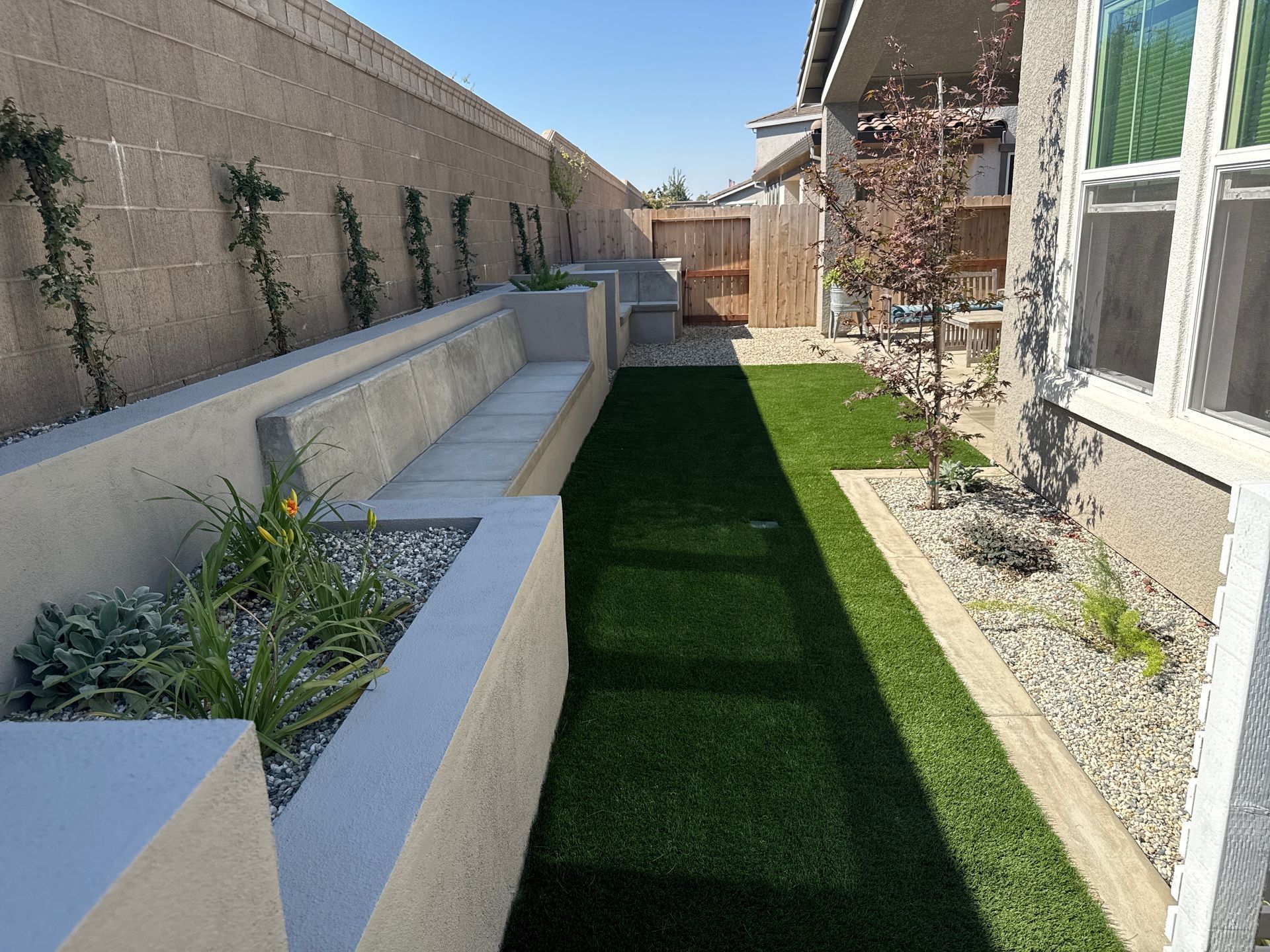
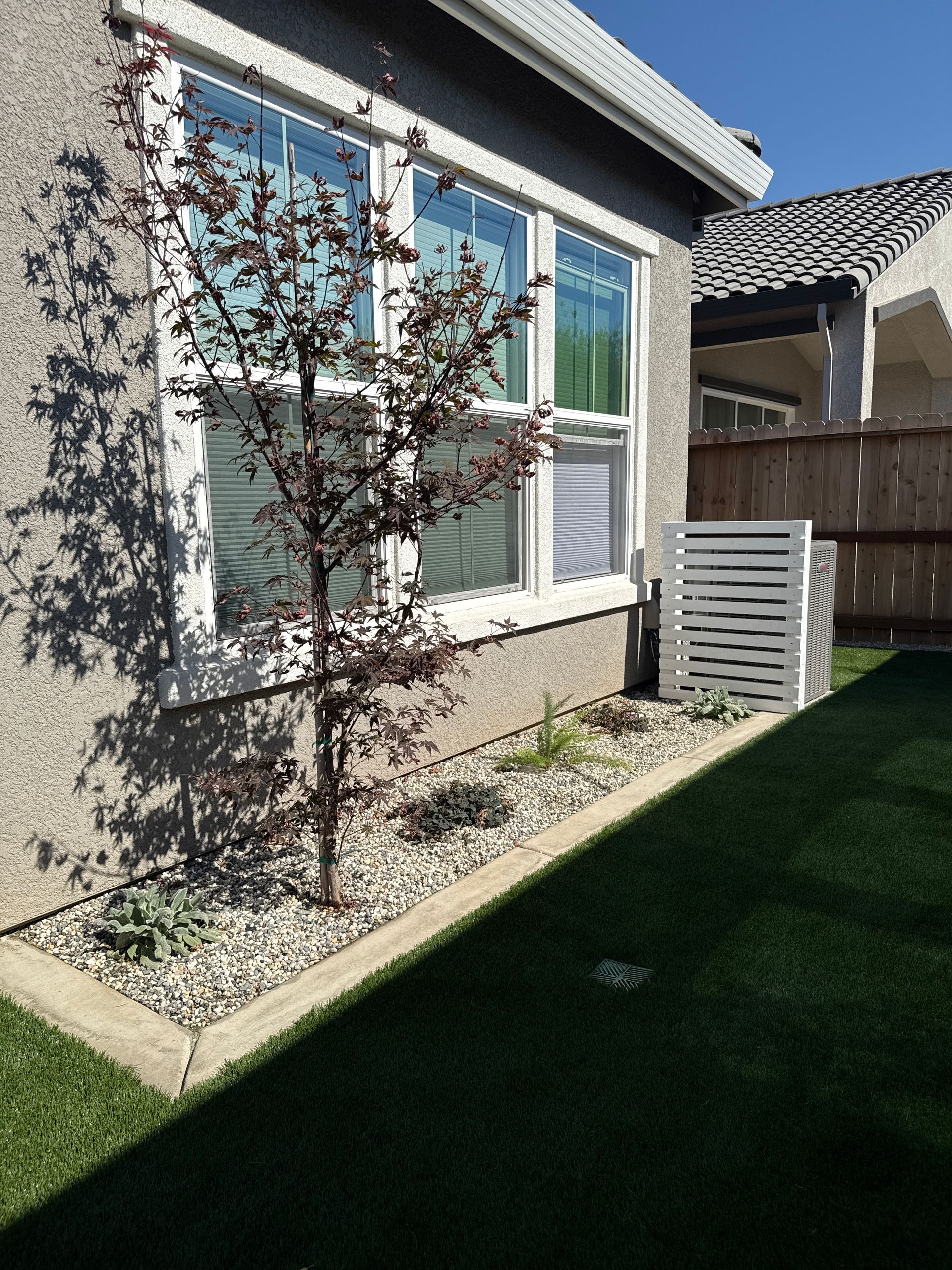
What this looks like in practice: In one project we completed locally, a side yard was transformed from a maintenance problem into a finished space. A runner of deep green artificial turf fills the center of the narrow yard, bordered on both sides by a clean concrete edging that separates the turf from adjacent planting beds. Along the house foundation, a white pea gravel bed holds a Japanese maple and low-growing ground cover plants. The planting bed requires no lawn maintenance, minimal watering, and no mowing. The turf stays green and full regardless of what the temperature does.
This combination handles one of the most common difficult spaces in Stockton residential properties: the side yard. Too narrow for meaningful activity, too shaded for grass to establish properly, and usually the last area of the yard to get attention. Turf, concrete edging, and a defined rock planting bed turn it into a finished, intentional space that looks as good in August as it does in January.
Why it is low maintenance: Artificial turf requires no mowing, no watering for appearance, and no seasonal replanting. The concrete edging holds the border permanently without shifting or requiring replacement. Pea gravel in the planting beds suppresses weeds and retains soil moisture around the plants that are there, reducing irrigation needs significantly. The result is a space that looks maintained without requiring consistent effort to keep it that way.
Best suited for: Side yards, narrow passages between the house and fence line, front yard strips, and any area where grass has historically struggled.
Idea 2: Artificial Turf and Large Concrete Stepping Slabs Around a Pool
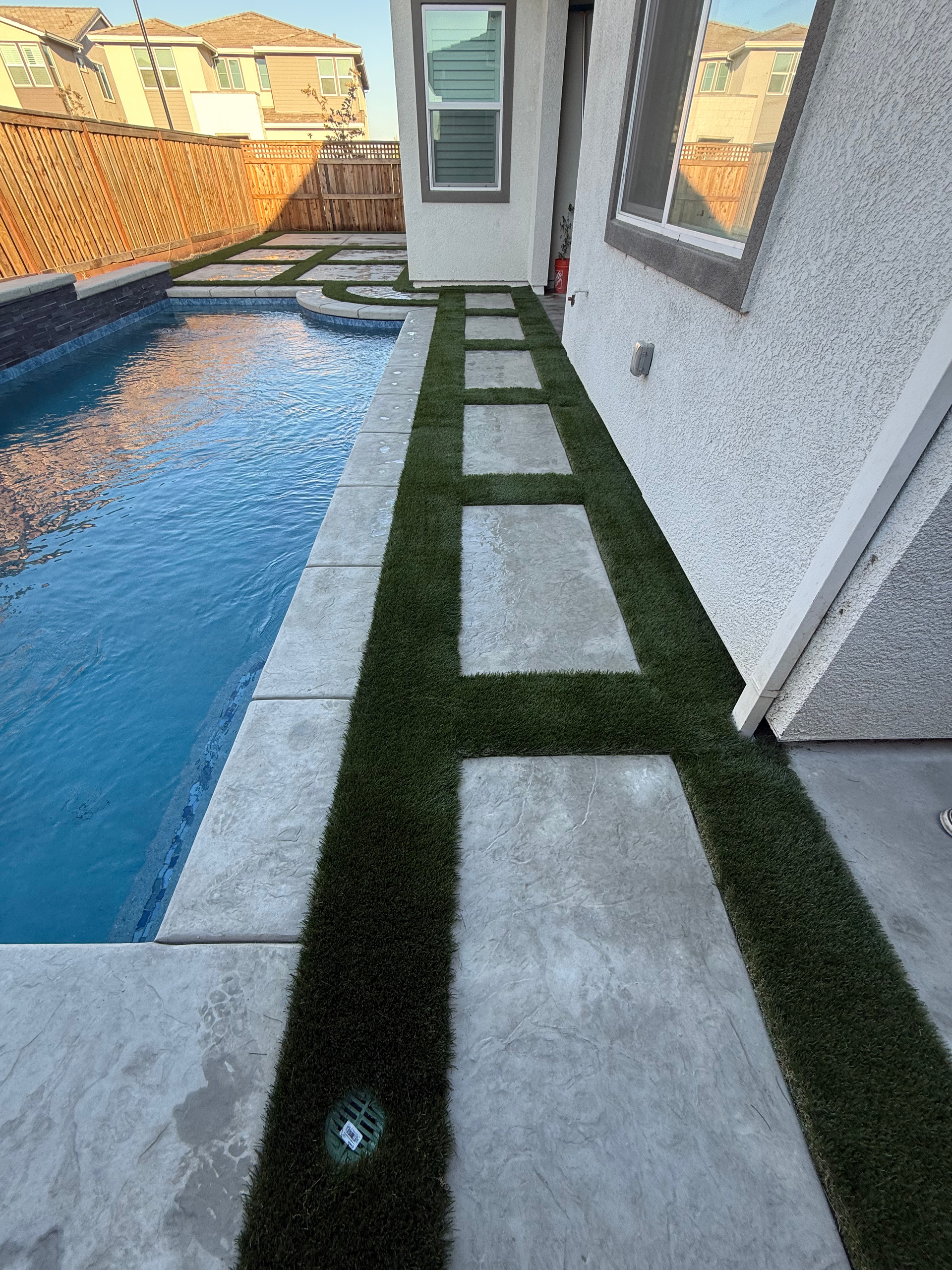
What this looks like in practice: In a pool backyard we completed in Stockton, artificial turf covers the yard surrounding the pool with large concrete slabs set directly into the turf along the pool edge. The slabs provide a solid, stable surface right at the water's edge where foot traffic is heaviest and where a turf-only surface would compress and mat over time. The turf fills the areas between and beyond the slabs, running along the side of the house toward the back of the yard.
The concrete pool coping handles the immediate pool edge. The stepping slabs extend that hardscape into the yard in a way that feels natural and functional rather than looking like a band of concrete was poured around the entire perimeter. Beyond the slabs, the turf takes over and the transition from hardscape to soft surface is clean.
Why it is low maintenance: No grass to mow, no irrigation system fighting pool splash and evaporation, no bare patches developing where foot traffic is heaviest near the water. Concrete slabs set into turf require no maintenance. The turf itself needs occasional rinsing and brushing but no weekly labor. For pool homeowners who have dealt with dead grass around the pool perimeter for years, this combination eliminates the problem permanently.
Best suited for: Pool backyards, any yard where foot traffic patterns create dead zones in natural grass, and properties where irrigation efficiency is a priority.
Idea 3: Concrete Slab Grid with Turf Joints
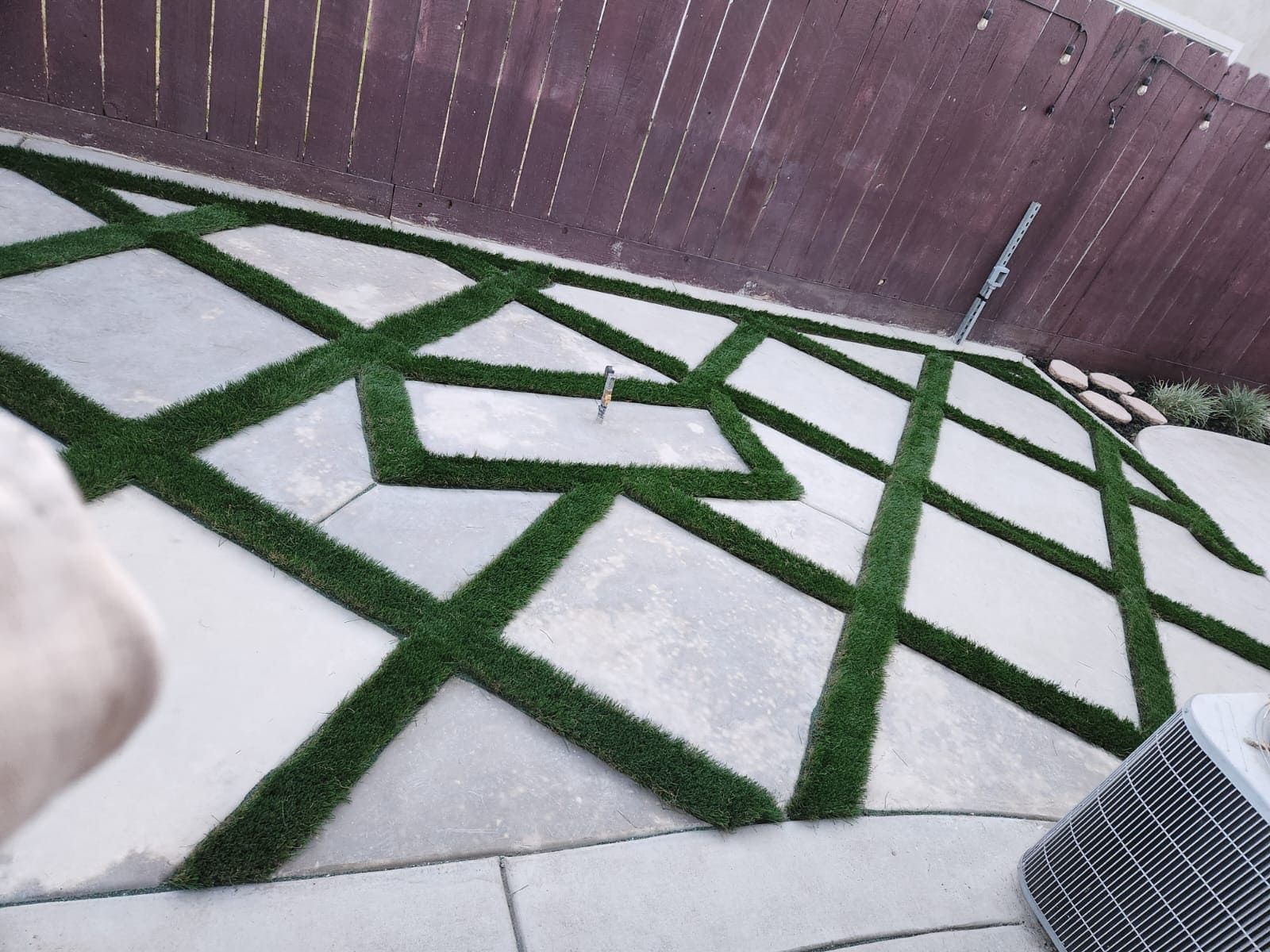
What this looks like in practice: In one backyard project we built, large concrete slabs are laid in a geometric grid pattern across the entire patio area, with artificial turf filling the joints between the slabs. The result looks like an oversized tile pattern where the grout lines are green. The concrete slabs pro vide a stable, level surface for furniture, foot traffic, and outdoor use. The turf joints soften the visual weight of the concrete and give the surface a designed quality that a solid concrete pad or plain paver layout does not have.
This is one of the more distinctive surface combinations we install, and it reads as intentional and contemporary from the moment you see it. The geometric pattern of the joints gives the yard structure and visual interest without adding any maintenance complexity.
Why it is low maintenance: Once installed correctly, this surface requires almost nothing. There are no individual units to shift, no weeds to pull from sand joints, no grass to mow between the slabs. The turf in the joints is artificial and stays green without water or attention. Occasional rinsing of the full surface is the main maintenance task.
Best suited for: Backyard patios, outdoor entertaining areas, and any space where the homeowner wants a visually distinctive surface without the upkeep that natural grass or sand-jointed pavers require.
Want to see what a low-maintenance yard looks like in your specific space? We can walk your property and show you which combination of materials makes the most sense for your yard's size, shape, and how you use it.
Call us at (209) 871-8110 or
request a free estimate online.
Idea 4: Large-Format Concrete Slabs with Pea Gravel Joints and a Pergola
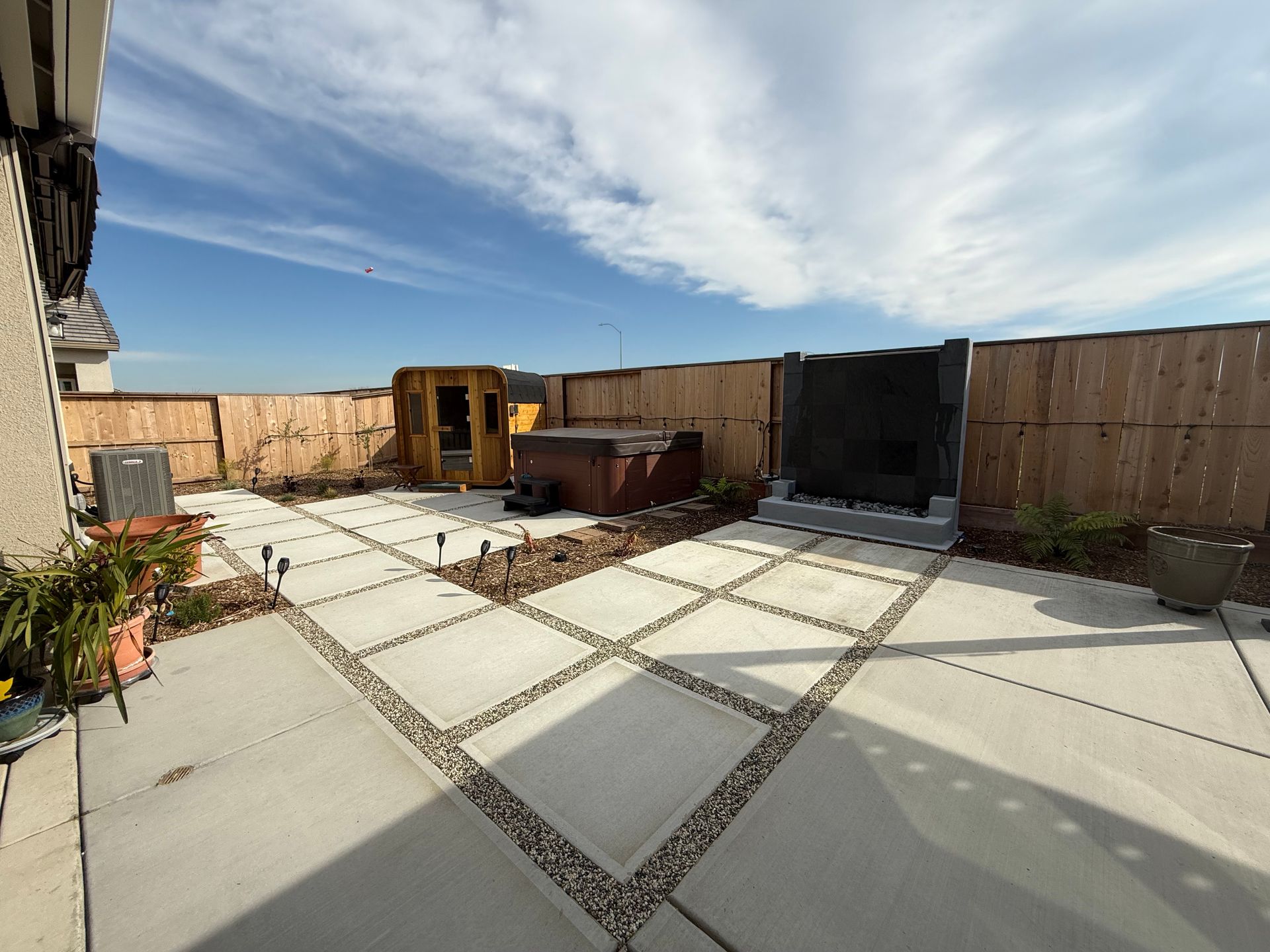
What this looks like in practice: One of the most complete low-maintenance backyard setups we have built in the Stockton area combines large-format concrete slabs with pea gravel or decomposed granite filling the joints between them, a sauna structure, a hot tub, and an aluminum pergola across the back of the space. The concrete slabs provide a solid, level surface across the full yard. The gravel joints between the slabs drain efficiently and add texture to the surface that breaks up the visual mass of wall-to-wall concrete. Decorative mulch fills the planting borders along the fence line.
This yard has no grass. No irrigation system running daily in summer. No mowing. The materials handle the Central Valley's heat and clay soil without requiring seasonal attention. The pergola adds shade that makes the concrete surface usable in the afternoon heat that makes unshaded outdoor spaces in Stockton uncomfortable for four to five months of the year.
Why it is low maintenance: Large concrete slabs are permanent and stable. Pea gravel joints drain well and do not require the periodic replenishment that sand-jointed pavers do. Decorative mulch in the borders needs occasional topping off but suppresses weeds and retains soil moisture significantly better than bare soil. Shade from the pergola reduces surface temperature enough to make the space genuinely usable in summer rather than decorative.
Best suited for: Homeowners who want a full backyard transformation, properties where water costs or drought restrictions make irrigation-dependent landscaping impractical, and any yard where the goal is a complete outdoor living space that requires minimal upkeep.
Idea 5: Shade Structure over a Flagstone or Irregular Concrete Surface
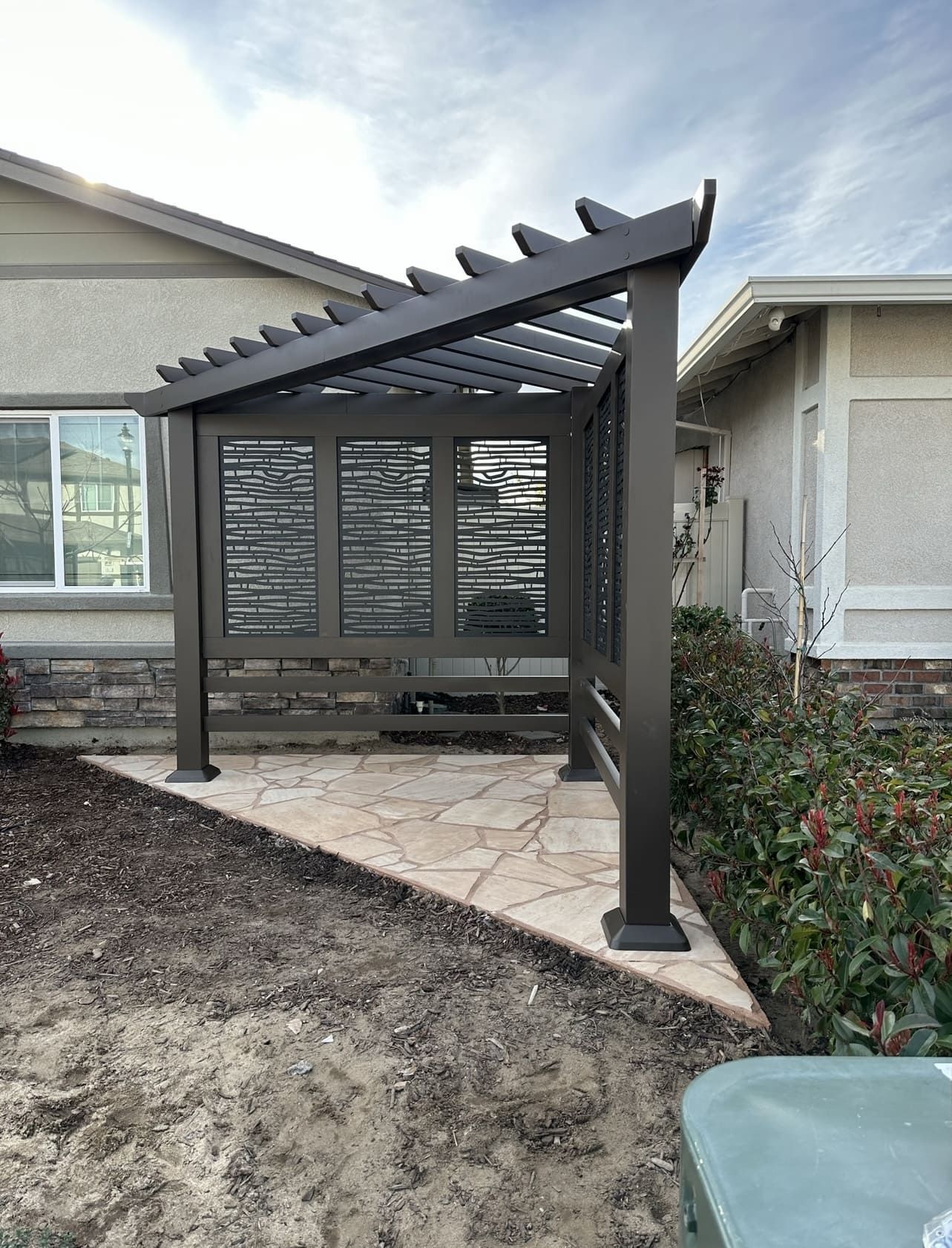
What this looks like in practice: In a front yard project we completed, a dark aluminum pergola with decorative laser-cut privacy panels was installed over a flagstone-style concrete surface. The concrete provides a finished, weather-resistant base for the structure. The pergola creates a defined shaded zone adjacent to the house, with decorative mulch in the surrounding planting beds.
Shade structures are one of the most overlooked elements in Stockton low-maintenance landscaping, and one of the most impactful. A yard that has no shade is largely unusable from noon until early evening during summer, regardless of how well it is maintained or how attractive the materials are. Adding a pergola or shade structure over a hardscape surface converts the hottest part of the day from outdoor avoidance to genuine outdoor use.
Why it is low maintenance: Aluminum pergola structures do not rot, warp, or require painting the way wood structures do. A concrete base beneath the structure requires no maintenance. Decorative mulch in surrounding planting beds suppresses weeds and reduces irrigation needs. The combination of materials covers the entire visible surface area of the space with zero grass and minimal water demand.
Best suited for: Front yards where a defined outdoor seating or entry area is wanted, side yards adjacent to the house, and any space where shade is the missing element preventing the area from being usable.
Why Low-Maintenance Landscaping Works Better in Stockton Than Most Places
The case for low-maintenance landscaping is stronger in Stockton than in most California cities, and stronger than most contractors will tell you directly. Here is the honest version.
The climate is genuinely hard on natural grass. Stockton averages over 260 sunny days per year. Summer temperatures regularly reach 100 to 110 degrees. Natural grass in those conditions requires significant irrigation, consistent fertilization, aeration, and seasonal overseeding just to stay alive. In years with drought restrictions, it often cannot be kept alive at all.
Water costs are a real factor. The water required to maintain natural grass in a Stockton summer is not a rounding error on the monthly bill. Homeowners who replace grass with turf, rock, and concrete typically see meaningful reductions in their water usage and corresponding reductions in their monthly costs.
Clay soil creates ongoing problems for grass. Much of San Joaquin County has clay-heavy soil that compacts easily, drains poorly, and creates patchy, uneven lawn conditions that require constant attention. Artificial turf and hardscape materials sit on a properly prepared base that addresses the clay beneath rather than fighting it every season.
The visual result is consistent year-round. Natural grass in Stockton looks its best in spring and its worst in August. Artificial turf, concrete, rock, and hardscape look the same in every month of the year. A yard that looks good in February and in September without any intervention is genuinely low-maintenance in a way that seasonal grass care never is.
What Low-Maintenance Landscaping Costs in Stockton
This is the question most homeowners want answered before anything else, and the honest answer is that it varies enough by project that a specific number is not useful without knowing your yard's size, current condition, and what materials you are choosing.
What is useful to know:
Artificial turf installation in Stockton typically runs higher upfront than natural sod but eliminates ongoing irrigation, fertilization, and lawn care costs. The break-even point where turf pays for itself compared to the ongoing cost of maintaining natural grass in this climate is generally within a few years for most residential yards.
Concrete and hardscape costs depend on the scope: stepping slabs in turf, a full slab grid, or a large-format paver patio with gravel joints are all different price points. The common thread is that once the concrete is down, there are no ongoing material or labor costs associated with it.
Decorative rock and mulch are among the lowest-cost ground cover options on a per-square-foot basis and among the highest-impact visually when combined with defined concrete edging and selected plantings.
Shade structures vary widely by size and material. Aluminum pergolas cost more upfront than wood but require no maintenance for the life of the structure.
The right way to get a number is through a free estimate where we look at your specific yard, what is there now, what you want to achieve, and which combination of materials makes the most sense for your budget and how you actually use the space.
Get a Free Low-Maintenance Landscape Estimate in Stockton
If you are tired of fighting your yard every summer and want to build something that looks good and stays that way, we can walk your property and put together a plan that works for your specific space.
Drago Inc. serves Stockton, Manteca, Tracy, Lodi, Lathrop, and surrounding communities throughout San Joaquin County.
Call us at (209) 871-8110 or request a free estimate online.
Frequently Asked Questions
-
What is the most low-maintenance landscaping for Stockton's climate?
Describe the item or answer the question so that site visitors who are interested get more information. You can emphasize this text with bullets, italics or bold, and add links. -
Is artificial turf worth it in Stockton?
Describe the item or answer the question so that site visitors who are interested get more information. You can emphasize this text with bullets, italics or bold, and add links. -
What ground cover works best instead of grass in Stockton?
Decomposed granite, pea gravel, and decorative rock are the most common low-maintenance grass alternatives in the Stockton area. They drain well in the wet season, reflect or absorb heat appropriately depending on color, require no irrigation, and suppress weeds when installed over a proper weed barrier. Combined with concrete edging to define the borders, they are among the cleanest-looking and lowest-effort options available.
-
How much does low-maintenance landscaping cost in Stockton?
It varies significantly by yard size and material choices. A basic conversion from natural grass to artificial turf in a standard backyard is a different cost than a full outdoor living space with large-format concrete slabs, a pergola, and decorative rock borders. The best starting point is a free estimate that looks at your specific yard rather than a per-square-foot average that may not reflect your actual project.
-
Do I need to water artificial turf in Stockton's heat?
Artificial turf does not need water to stay green. Occasional rinsing is recommended during hot months to cool the surface temperature and to flush dust and any pet waste through the drainage layer. This is a fraction of the water required to maintain natural grass and can be done as needed rather than on a daily or twice-daily irrigation schedule.
-
What plants work well in low-maintenance Stockton landscaping?
Low-water, heat-tolerant plants work best in the Central Valley. Japanese maples, lavender, rosemary, ornamental grasses, and succulents are among the most common choices in Stockton yards because they establish well, handle the summer heat without constant irrigation, and look appropriate in rock or mulch planting beds. We flag when specific plant recommendations fall outside our scope as a concrete and landscaping contractor, and can refer you to a local nursery for detailed plant selection guidance.
Drago Inc. is a licensed (CSLB #1017023) and insured concrete contractor serving Stockton, Manteca, Tracy, Lodi, Lathrop, and surrounding San Joaquin County communities since 2016. Learn more about our concrete patio services or contact us for a free estimate.
Share Now!