Choosing the Right Ground Cover for Your Stockton Landscape
Once you decide to replace dead grass or bare dirt in your Stockton yard, the next question is what to replace it with. The options are not complicated, but each one performs differently in the Central Valley's specific conditions, and choosing the wrong one for your situation means dealing with the consequences every season.
Mulch, rock, decomposed granite, and artificial turf are the four ground cover options we install and work around most frequently in Stockton and the surrounding valley. Each has a legitimate use case. Each has trade-offs that most people do not find out about until after the installation.
Here is an honest comparison of all four based on how they actually perform in this climate, what they cost, how long they last, and which situations each one is best suited for.

Option 1: Decorative Rock and Gravel
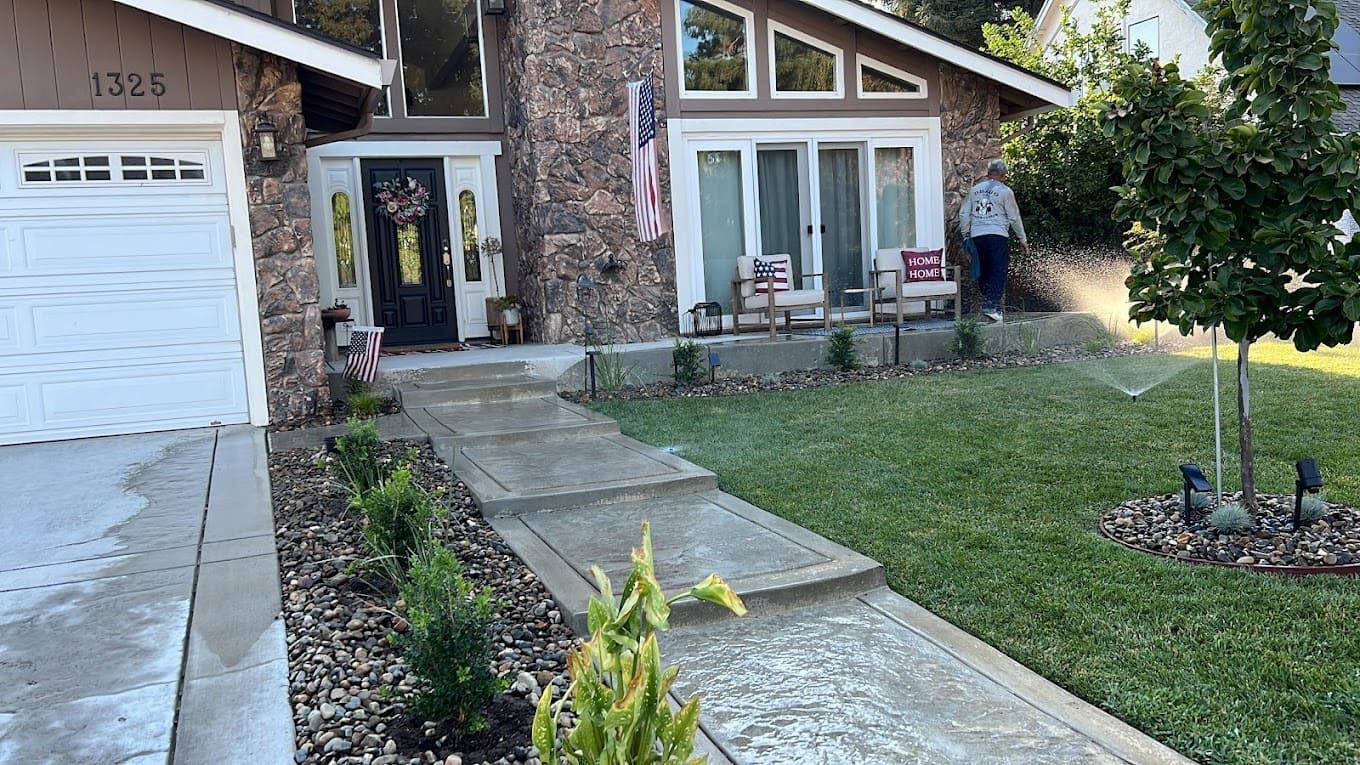
Decorative rock is the most common ground cover replacement for grass in Stockton and across the Central Valley, and for good reason. It handles the climate better than almost any other option, requires almost no maintenance, and is available in a range of sizes, colors, and textures that work with most residential landscaping styles.
How It Performs in Stockton
Rock does not decompose, does not blow away in wind the way lightweight mulch does, and does not require replacement on a regular schedule. In Stockton's heat, it stays in place through summer and through the wet season without washing or matting. It drains well during winter rains, which matters in a region where clay soil can create standing water issues if the ground cover above it does not drain efficiently.
The heat absorption trade-off is real. Dark decorative rock in full sun gets hot in summer. White or light-colored pea gravel stays noticeably cooler than dark river rock or black lava rock under the same conditions. Color choice is a practical decision in Stockton's climate, not just an aesthetic one.
What It Costs
Decorative rock has a higher upfront cost than mulch but a significantly lower long-term cost because it does not need to be replenished. Once it is down over a proper weed barrier with clean concrete edging holding the borders, it stays where it is. This is approximate and go verify current pricing in your area, but in most cases rock pays for itself relative to mulch within two to three replenishment cycles.
What Makes the Installation Matter
Rock installed without a weed barrier beneath it becomes a weed problem within one to two seasons. Rock installed without concrete edging or a defined border migrates into adjacent turf, concrete, or planting areas over time. The material itself is straightforward. The prep work beneath and around it is what determines whether it looks good and stays that way for years or becomes a recurring problem.
Best for: Planting beds, borders along fences and walls, full front yard conversions, areas with full sun exposure, and anywhere a permanent, low-maintenance solution is the goal.
Not ideal for: Play areas where children will be barefoot, spaces where you frequently walk without shoes, or areas where you plan to replant frequently since rock makes planting and replanting significantly more labor-intensive than mulch.
Option 2: Decorative Mulch
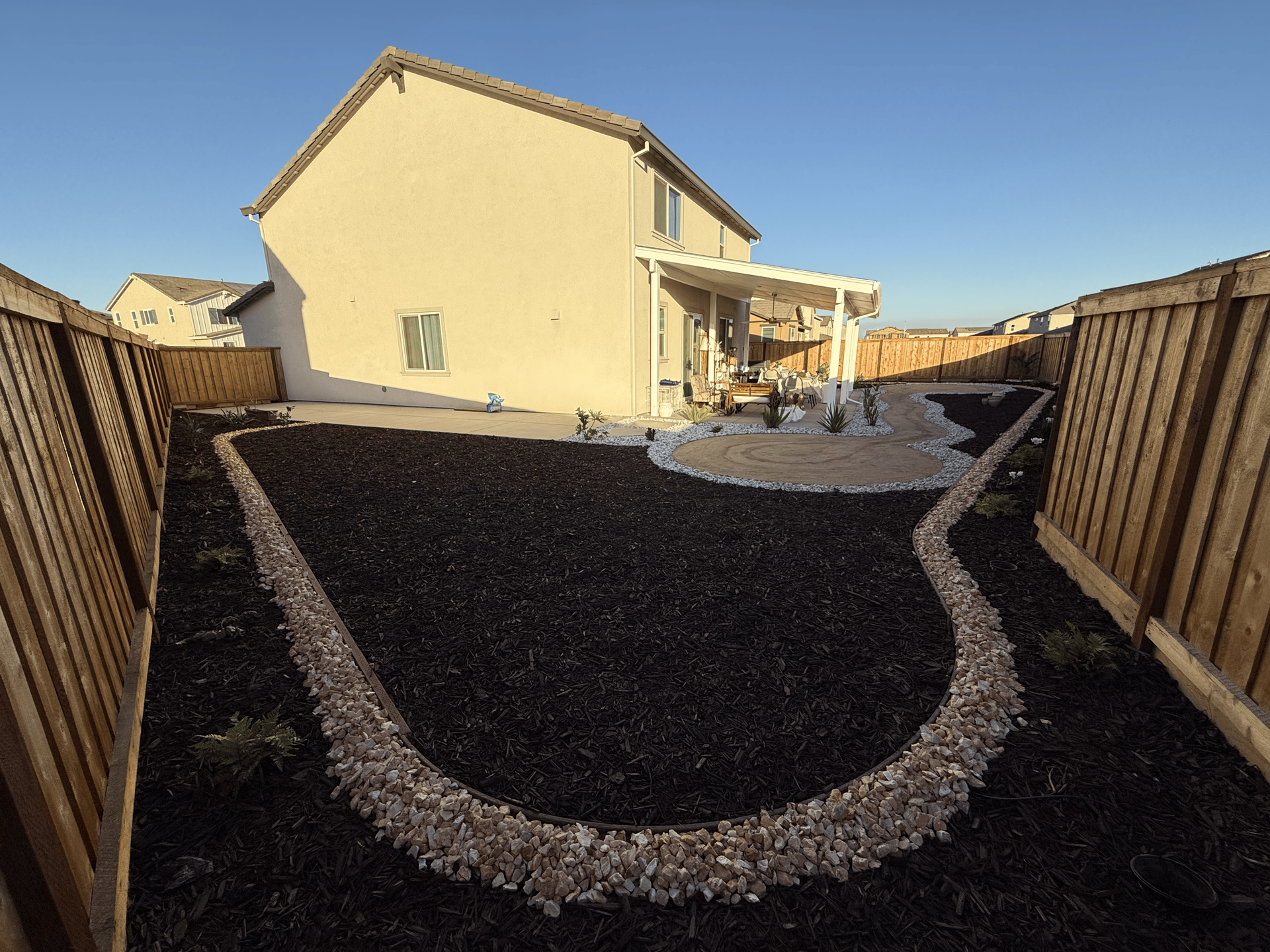
Mulch is the most widely used ground cover in landscaping generally and brings genuine benefits to planting beds specifically. It is not the best choice for every situation in Stockton, but in the right application it performs better than rock or decomposed granite.
How It Performs in Stockton
Mulch regulates soil temperature beneath it, keeping plant roots cooler in summer heat and protecting them during the occasional frost in winter. It retains soil moisture, which reduces irrigation frequency in planting beds and directly supports the plants growing in it. As it breaks down over time, it adds organic matter to the soil below.
The trade-off is that it does break down. In Stockton's heat and sun, organic mulch decomposes faster than it would in a cooler climate. A fresh mulch installation typically needs topping off within one to two years, and a full replenishment every two to three years depending on the depth of the original application and the sun exposure.
Mulch also blows more readily than rock in windy conditions. Stockton sees significant seasonal wind, particularly in spring and fall, and lightweight mulch in exposed areas migrates more than heavier materials. Gorilla hair mulch and shredded wood mulch hold better than lighter bark chips in exposed locations.
What It Costs
Mulch is less expensive per cubic yard than decorative rock on a material basis. The ongoing replenishment cost is what changes the math over a five to ten year period. For pure planting beds where the soil health benefit of mulch matters, the replenishment cost is justified. For areas where ground cover is purely functional and no planting is involved, rock or decomposed granite typically makes more sense economically.
What Makes the Installation Matter
Mulch depth matters more than most homeowners realize. Two inches of mulch is the minimum for any meaningful weed suppression. Three inches is better for hot Stockton summers where the moisture retention benefit is most valuable. Mulch applied too shallow dries out quickly and loses its weed suppression function within a season.
A weed barrier beneath the mulch is a judgment call that depends on the application. In pure decorative areas with no planting, a weed barrier under mulch makes sense. In active planting beds where you will be adding plants, dividing perennials, or replanting seasonally, a barrier under mulch gets in the way and is typically not recommended.
Best for: Active planting beds, foundation plantings around the house, tree rings, and any area where improving soil health for the plants growing in it is the goal.
Not ideal for: Full yard conversions from grass, areas with no planting where a permanent ground cover is wanted, windy exposed locations, or sloped areas where it will wash downhill in rain events.
Option 3: Decomposed Granite
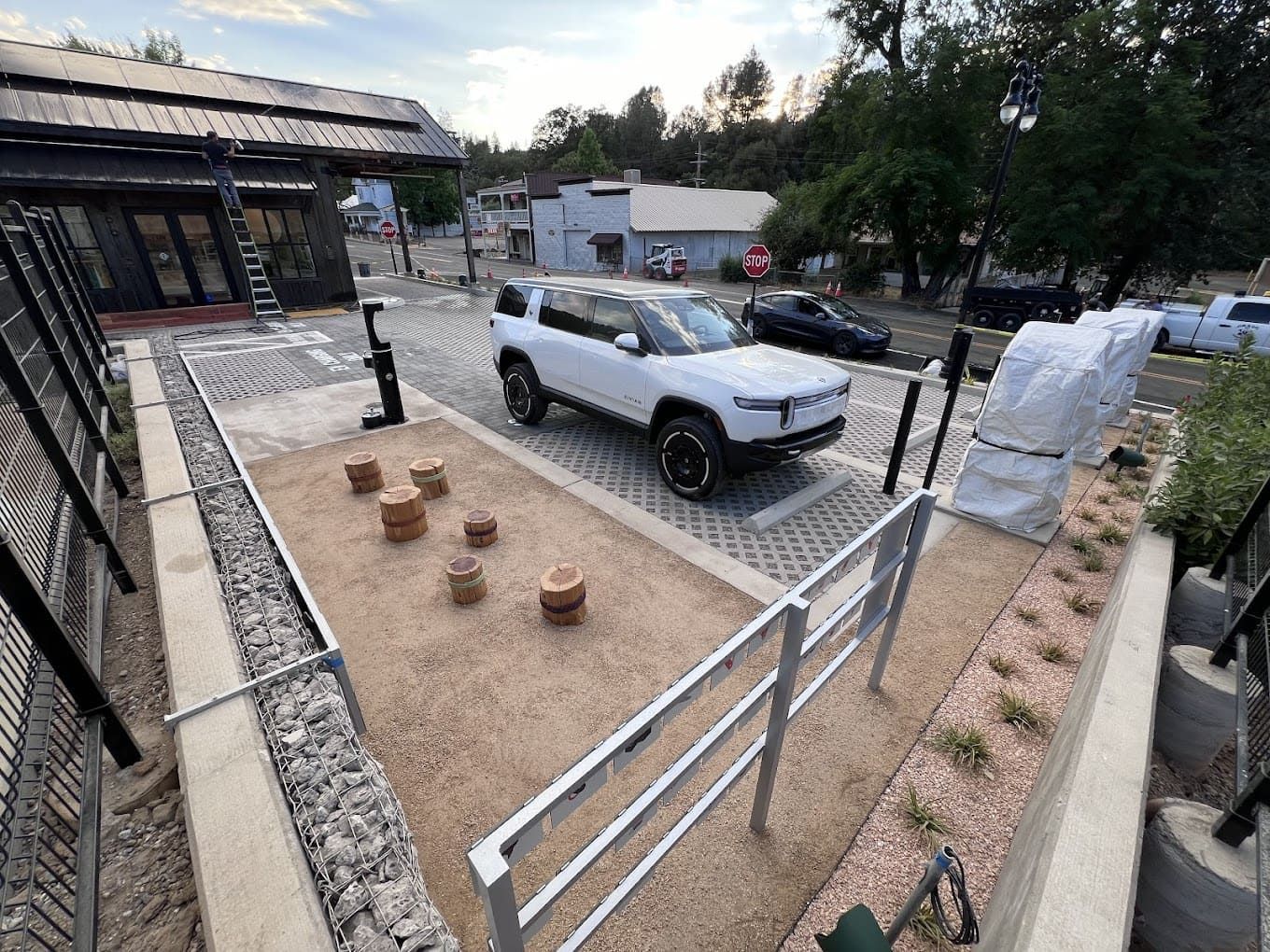
Decomposed granite, commonly called DG, sits between rock and mulch in terms of character. It is a fine-textured crushed granite material that compacts when wet and produces a surface that reads as natural and informal. It is common in California drought-tolerant landscaping and works particularly well in the Central Valley's dry climate.
How It Performs in Stockton
DG is one of the best-draining ground cover materials available. Unlike packed soil or clay, it allows water to move through it quickly during Stockton's winter rain events. It does not blow away the way mulch does, but it also does not stay fully in place the way rock does. In high-traffic areas it can develop ruts or low spots over time as foot traffic compacts it unevenly.
Stabilized DG, which is DG mixed with a binding agent, holds its shape better under foot traffic and is appropriate for paths, patios, and areas where the surface will see regular use. Unstabilized DG works well for low-traffic areas and planting beds where a natural, informal look is the goal.
DG in Stockton's heat stays cooler than dark rock under direct sun because its light tan color reflects more heat. For full front yard conversions and large open areas, this thermal performance is worth noting.
What It Costs
DG is typically one of the most cost-effective ground cover options on a material basis. The installation cost depends on whether stabilized or unstabilized DG is being used and whether edging is needed to contain it. Without proper edging, DG migrates into adjacent lawn or concrete areas over time and requires periodic redistribution.
What Makes the Installation Matter
Edging is the most important installation consideration with DG. Concrete edging or a solid border material holds it in place and keeps it from washing or migrating over time. On slopes, DG without edging or erosion control fabric beneath it washes significantly during rain. On flat or gently sloped surfaces with proper containment, it stays well-behaved.
Best for: Drought-tolerant front yard conversions, garden paths and walkways, informal planting areas, large open spaces where the natural California look is the aesthetic goal, and any area where cost is a primary consideration.
Not ideal for: Steeply sloped areas without erosion control measures, high-traffic areas without stabilization, or situations where a clean, formal look is the goal since DG has an inherently casual, natural character.
Option 4:
Artificial Turf
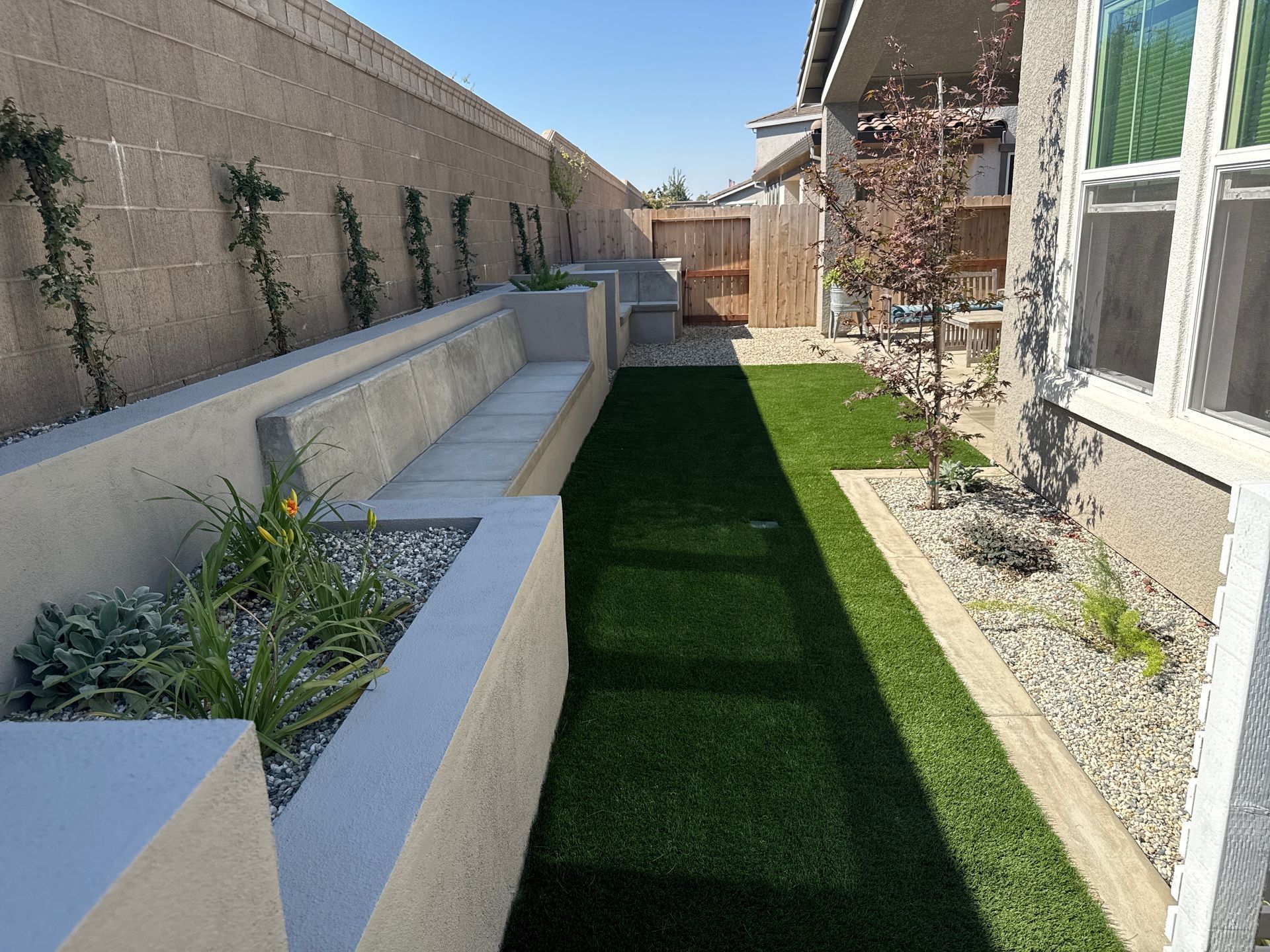
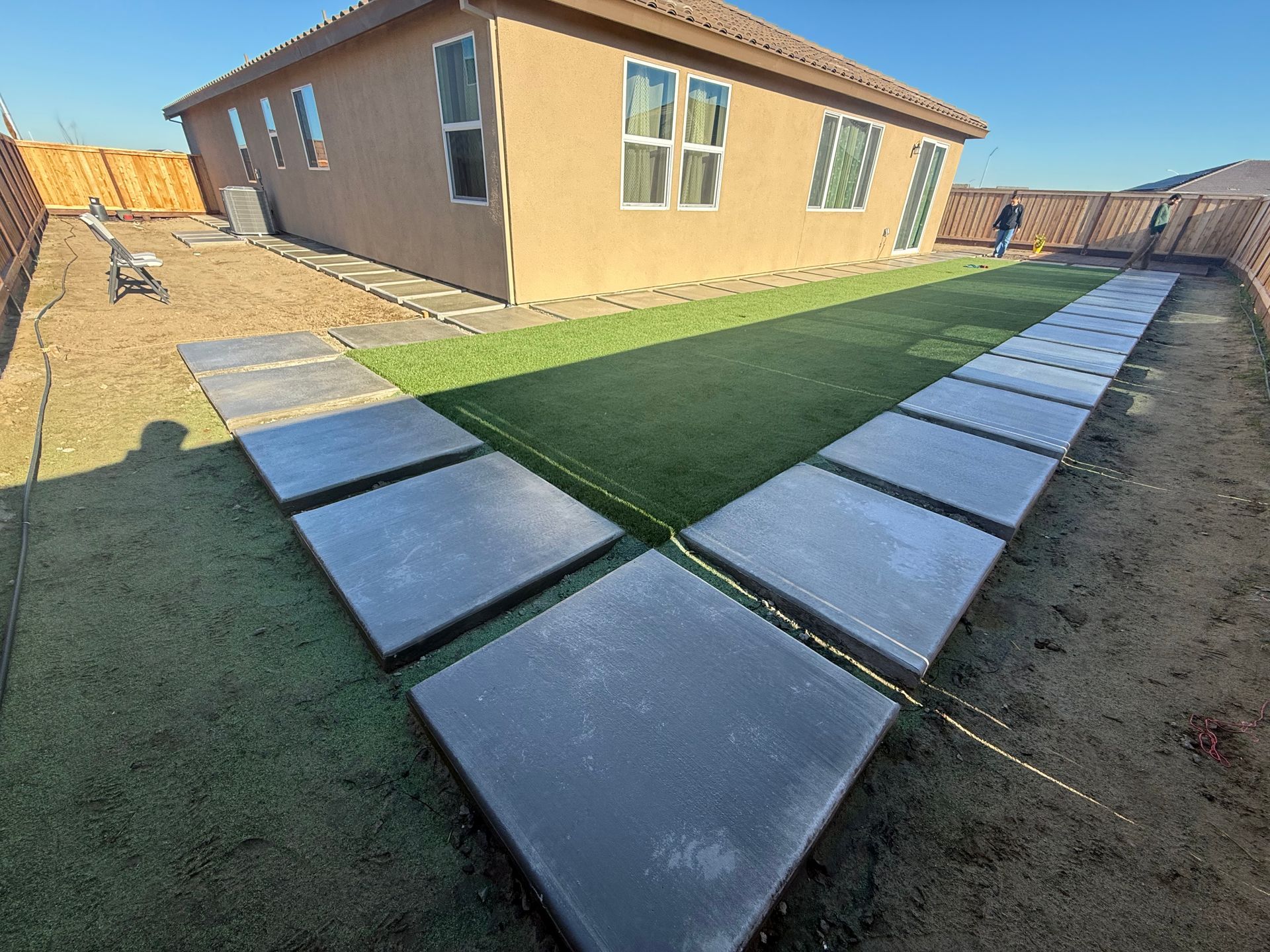
Artificial turf is in a different category from rock, mulch, and DG because it replaces the function and appearance of grass rather than simply covering bare ground. It belongs in this comparison because for many Stockton homeowners, the choice between turf and a rock or DG ground cover is the core decision they are making.
How It Performs in Stockton
Artificial turf stays green and full regardless of heat, drought restrictions, or irrigation. It handles clay soil well because it is installed on a prepared base that sits above the native soil rather than relying on it for drainage or support. It does not decompose, does not need to be replenished, and does not blow or wash away.
The surface heat consideration is the main functional trade-off. Artificial turf in direct sun gets warmer than DG or light-colored rock. A quick rinse brings surface temperature down quickly, and shade structures reduce the issue significantly for spaces where barefoot use in summer is important.
For pet owners, turf requires routine rinsing and periodic enzyme cleaning, which is more maintenance than rock or DG but significantly less than maintaining natural grass.
What It Costs
Artificial turf has the highest upfront cost of the four options. It also has the clearest long-term financial case in Stockton specifically because it eliminates irrigation, lawn care, and seasonal replanting costs that compound over the life of the installation. For areas that were previously natural grass, the ongoing cost savings are real and accumulate quickly in a climate that requires significant water and maintenance to keep grass alive.
What Makes the Installation Matter
Base preparation, drainage, and edge finishing are the three factors that separate a turf installation that looks and performs well for fifteen to twenty years from one that develops drainage problems, odor issues, or edge lifting within a few seasons. The turf product itself matters, but the work beneath it matters more.
Best for: Full lawn replacement, backyards with pets and children, pool surrounds, side yards, and any area where the goal is a consistently green, grass-like appearance without irrigation or mowing.
Not ideal for: Areas with significant shade where the artificial look is more apparent, very small accent areas where rock or mulch is more cost-appropriate, or situations where the budget does not support a quality installation since an undersized install budget is more likely to produce base and drainage problems than with other ground cover types.
Side-by-Side Comparison
| Factor | Decorative Rock | Mulch | Decomposed Granite | Artificial Turf |
|---|---|---|---|---|
| Upfront cost | Medium | Low | Low | High |
| Long-term cost | Low | Medium (replenishment) | Low | Low |
| Maintenance | Very low | Low to medium | Low | Low |
| Heat performance | Varies by color | Good (insulates soil) | Good (light color) | Warm in direct sun |
| Drainage | Excellent | Good | Excellent | Good with proper base |
| Weed control | Good with barrier | Good with depth | Good with barrier | Excellent |
| Lifespan | Permanent | 2 to 3 years before replenishment | Permanent (restabilize as needed) | 15 to 20 years |
| Best application | Beds, borders, full yard | Active planting beds | Paths, open areas, conversions | Lawn replacement |
| Appearance | Natural, formal or casual | Natural, informal | Natural, California casual | Grass-like, green |
How Edging and Base Prep Affect Every Option
This is the part of ground cover installation that most homeowners do not think about until something goes wrong.
Every ground cover option on this list performs better and lasts longer when it is properly contained and installed on the right base. Concrete edging between ground cover and adjacent lawn, hardscape, or other planting areas serves two functions: it keeps the ground cover material from migrating out of its zone and keeps adjacent grass or weeds from creeping into the ground cover area.
The base beneath the ground cover matters equally. Rock or DG on clay soil without any base preparation can trap water rather than drain it in the wet season. A proper gravel base layer beneath rock or DG allows water to move through rather than pool beneath the surface.
None of this is complicated to do correctly. But skipping it to reduce installation cost is the most common reason ground cover installations that look good on day one become a maintenance problem within a few seasons. When getting quotes for any ground cover project, ask specifically what base preparation is included and how the borders will be finished.
Which Option Is Right for Your Stockton Yard
Use this to guide your decision:
- Choose decorative rock if: You want a permanent, zero-maintenance solution for a bed, border, or full yard area with no active planting. Heat color considerations apply if the area gets full sun.
- Choose mulch if: You have active planting beds where soil health matters, you want to improve moisture retention around existing plants, or you prefer an organic, natural look that you are willing to refresh every two to three years.
- Choose decomposed granite if: You are converting a front yard to drought-tolerant landscaping, creating informal garden paths, or working with a large open area where cost is a primary consideration and a natural California look fits the aesthetic.
- Choose artificial turf if: You are replacing lawn in an area where a green, grass-like appearance matters, you have pets or children using the space regularly, or you want to permanently eliminate irrigation and lawn care in that zone.
In most Stockton yards, the right answer is a combination of these materials rather than a single choice across the entire property. Turf in the main lawn area, decorative rock in planting beds and borders, DG on garden paths, and concrete edging throughout to keep everything defined and in place is a complete low-maintenance yard that handles every zone with the material best suited to it.
Get a Free Ground Cover Estimate in Stockton
If you are trying to figure out which direction makes the most sense for your specific yard, we can walk the property with you, look at what is there now, and give you a clear recommendation based on your soil conditions, sun exposure, how you use the space, and your budget.
Drago Inc. serves Stockton, Manteca, Tracy, Lodi, Lathrop, and surrounding communities throughout San Joaquin County.
Call us at (209) 871-8110 or request a free estimate online.
Frequently Asked Questions
-
What is the best ground cover to replace grass in Stockton?
It depends on the area and how you use it. Artificial turf is the strongest replacement for lawn areas where a green appearance matters and pets or children use the space. Decorative rock and decomposed granite are the best permanent options for planting beds, borders, and full yard conversions where a natural ground cover look is the goal. Mulch works best in active planting beds where soil health and moisture retention matter.
-
Does decomposed granite get hot in Stockton summers?
Describe the item or answer the question so that site visitors who are interested get more information. You can emphasize this text with bullets, italics or bold, and add links. -
How long does mulch last in Stockton's climate?
Organic mulch breaks down faster in Stockton's heat and sun than in cooler climates. Expect to top off within one to two years and replenish fully every two to three years depending on the original depth and sun exposure. Three inches of mulch at installation is the minimum for meaningful weed suppression and moisture retention in the Central Valley.
-
Does rock landscaping increase home value in Stockton?
A finished, clean rock landscaping installation with defined edging, selected plantings, and a cohesive design reads as upgraded landscaping to buyers in the Stockton market. Low-maintenance, drought-tolerant yards are particularly attractive in California where water costs and restrictions are ongoing concerns. A well-executed rock and turf conversion is a meaningful curb appeal upgrade.
-
What goes under decorative rock to prevent weeds?
A commercial-grade woven weed barrier installed beneath decorative rock before the rock is placed is the standard approach. Consumer-grade plastic sheeting is not appropriate as it degrades, blocks drainage, and breaks down into pieces over time. A proper woven geotextile barrier allows water to drain through while blocking weed germination beneath the rock.
-
How thick should decorative rock be?
Two to three inches is the standard depth for decorative rock ground cover in residential applications. This depth provides adequate weed suppression, a finished visual appearance, and enough material to stay in place without being so deep that it is wasteful. Rock applied too shallowly allows weeds to push through more easily and does not have the visual density of a proper installation.
Drago Inc. is a licensed (CSLB #1017023) and insured concrete contractor serving Stockton, Manteca, Tracy, Lodi, Lathrop, and surrounding San Joaquin County communities since 2016. Learn more about our concrete patio services or contact us for a free estimate.
Share Now!