How to Seal a Concrete Driveway in Stockton
Sealing a concrete driveway extends its life, protects the surface from staining and water damage, and keeps it looking clean. For plain grey driveways, it is a reasonable DIY project if you have a free weekend and are willing to do the prep work correctly. For stamped, colored, or decorative concrete, it is a job that should go to whoever installed it.
Here is how the process works, what it actually takes to do it right, and where most homeowners run into problems.
Why Sealing Matters in Stockton's Climate
The Central Valley is hard on concrete. Summer temperatures regularly hit 100 to 110 degrees, which causes concrete to expand and contract through daily heat cycles. The winter wet season brings concentrated rainfall into soil that does not drain well. That moisture works into surface pores and unsealed cracks, and when it evaporates quickly in spring heat, it pulls material out of the surface over time.
A penetrating or film-forming sealer closes those pores. It slows water infiltration, reduces the staining that comes from oil drips, fertilizer runoff, and tannins from tree leaves, and provides a barrier against the UV degradation that turns concrete chalky and grey over time.
An unsealed driveway in Stockton will show its age faster than the same driveway in a milder climate. Sealing is not optional maintenance here, it is what keeps a 10-year-old driveway looking like a 5-year-old one.
Step 1: Choose the Right Sealer
There are two main categories of concrete sealer, and they do different things.
Penetrating sealers (also called impregnating sealers) soak into the concrete and chemically bond with the material. They do not change the look of the surface and do not leave a film or sheen. They protect from moisture and freeze-thaw damage without making the driveway slippery. This is the right choice for plain broom-finished driveways where you want protection without a visible change in appearance.
Film-forming sealers (acrylics, epoxies, polyurethanes) sit on top of the surface and create a protective coating. They give the concrete a wet look or a glossy sheen depending on the product. They enhance color on stamped or stained concrete and are what most decorative concrete installers recommend. They require more maintenance because they can peel, flake, or haze over time, especially under heavy UV exposure or if applied over a surface that is not completely dry.
For a standard concrete driveway in Stockton, a penetrating silane-siloxane sealer is the most practical choice. It protects without changing the surface, lasts several years without reapplication, and does not create slip hazards.
For stamped or colored concrete, use whatever the installer specifies, usually an acrylic sealer in a matte or satin finish. Using the wrong product on decorative concrete can lift the color layer, cloud the surface, or create adhesion problems that are expensive to fix.
Step 2: Surface Preparation
This is the step most DIYers rush, and it is where most sealing jobs fail. A sealer applied to a dirty, wet, or contaminated surface will not bond correctly and will peel or haze within months.
Clean the surface thoroughly. Sweep off all loose debris. Use a degreaser on any oil stains and scrub them out before washing. A pressure washer at 2,500 to 3,000 PSI is the right tool here. Work in sections and rinse completely.
Let it dry completely. This is not a few hours, it is 24 to 48 hours minimum in Stockton's summer heat. In cooler weather or after heavy rains, give it longer. Applying sealer to concrete that is even slightly damp is one of the most common causes of sealer failure. The surface needs to be fully dry all the way through, not just dry on top.
Check for existing sealer. If the driveway has been sealed before, you need to know what type of sealer was used. Applying a different sealer chemistry over an incompatible existing sealer can cause adhesion failure or discoloration. If you are not sure what is on the surface, test a small area in a low-visibility corner before doing the whole driveway.
Address any cracks first. Small surface cracks should be filled with a concrete crack filler before sealing. Sealer does not fill cracks, it seals the surface around them. Unfilled cracks will continue to allow water infiltration regardless of what goes on top.
Step 3: Check the Weather Window
Do not apply concrete sealer if rain is in the forecast within 24 to 48 hours. In Stockton, this mainly matters November through March.
Do not apply sealer when the surface temperature is above 90 degrees Fahrenheit. In summer, this means early morning application only. A sealer applied to a surface that is too hot will dry too quickly, leaving lap marks and uneven coverage that you will see every time you pull out of the driveway.
The ideal condition is a dry day with surface temperatures between 50 and 80 degrees, overcast if possible. Spring and fall in Stockton give you the most reliable weather windows for this project.
Step 4: Apply the Sealer
Read the product instructions first. Application rates, tools, and drying times vary by product and by how porous the concrete is.
For most penetrating sealers, a low-pressure garden sprayer or a pump sprayer works well. Work in 4 to 5 foot sections, applying in overlapping passes to avoid dry streaks. Penetrating sealers absorb into the surface rather than coating it, so the amount that soaks in versus runs off tells you how porous the concrete is. Areas where the sealer puddles and does not absorb quickly are denser sections that may need less product.
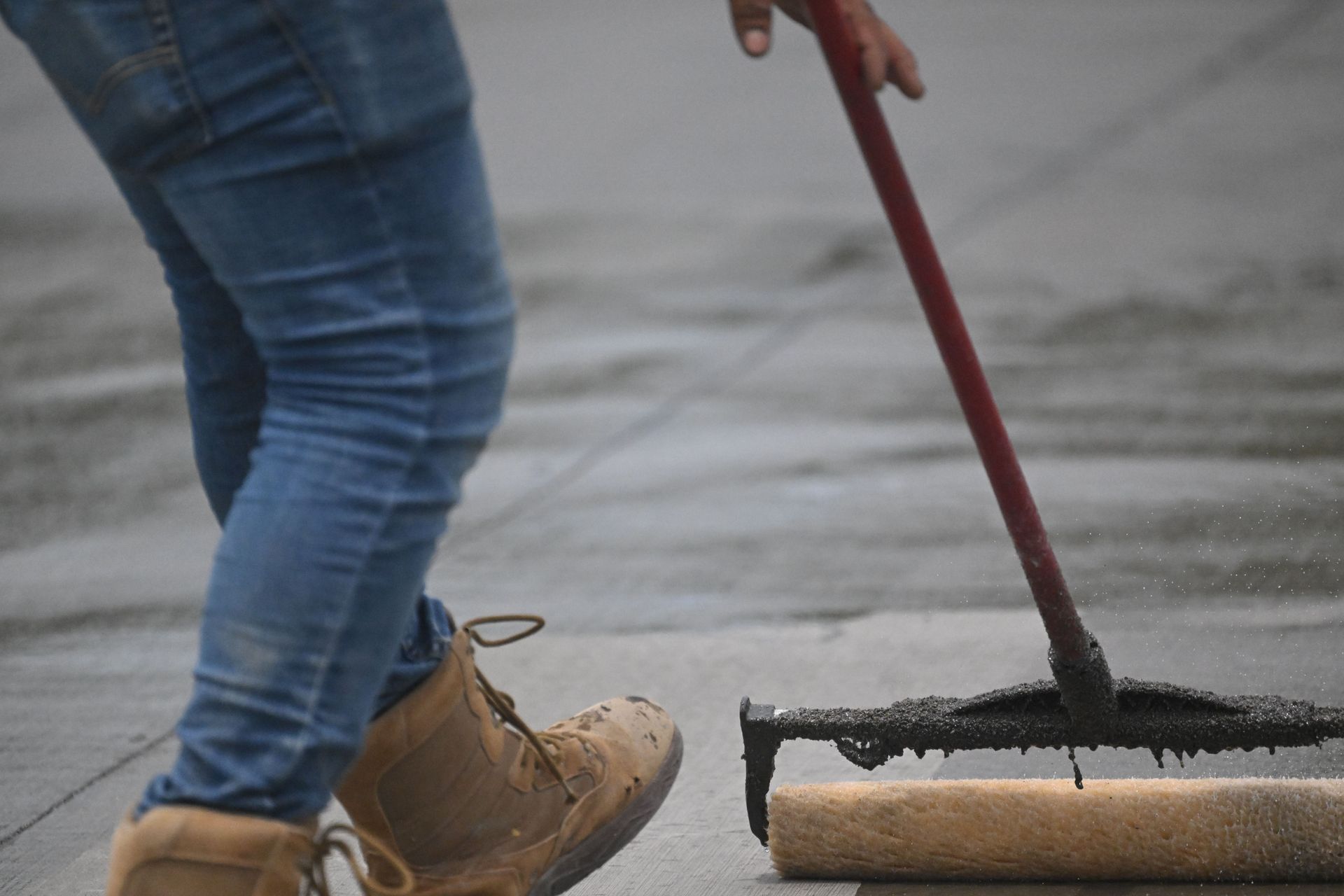
For film-forming sealers, a roller or squeegee gives more even coverage than a sprayer. Keep a wet edge to avoid lap marks. Apply two thin coats rather than one heavy coat. A heavy coat of acrylic sealer is more likely to peel.
Keep the driveway clear of foot traffic for at least 24 hours and vehicle traffic for 48 to 72 hours depending on the product. In Stockton's summer heat, the surface may feel dry sooner but the sealer continues curing below the surface.
How Often Should You Reseal in Stockton?
For penetrating sealers on a standard driveway, every 3 to 5 years is a reasonable interval. High-traffic driveways, those under large trees with leaf tannin staining, or driveways that see regular oil drips may need resealing closer to every 3 years.
For film-forming sealers on decorative concrete, every 2 to 4 years is more typical because those coatings wear from foot and vehicle traffic and from UV exposure. You will usually see the sign yourself before the interval is up: the surface starts to look dull or patchy in the high-traffic areas while the edges still look shiny.
The simplest test is a water bead test. Sprinkle water on the surface. If it beads up, the sealer is still doing its job. If it absorbs into the surface quickly, it is time to reseal.
When DIY Sealing Is Not the Right Call
There are a few situations where hiring the job out is the smarter move.
Stamped, colored, or decorative concrete. The stakes are higher here. The wrong sealer product, an application mistake, or sealing over a surface that was not properly prepped can damage the color layer, cloud the finish, or create a peeling problem that requires stripping and reapplication. Whoever installed your decorative concrete should be your first call for resealing.
A driveway with existing sealer problems. If the current sealer is peeling, bubbling, or hazed, the existing coating needs to come off before anything new goes on. Stripping sealer is a more involved process than applying it and is not worth trying without experience.
Large surfaces in summer heat. A long driveway in direct July sun is difficult to seal without lap marks because sections dry before you can maintain a wet edge. If you have more than roughly 500 square feet to cover and no way to work in the early morning before the surface heats up, professional application gives you a better result.
Unfamiliar surface history. If you bought the house and do not know what has been applied to the driveway, a professional can test and advise before you commit to a product.
FAQ: Sealing a Concrete Driveway in Stockton
-
How often should you seal a concrete driveway in Stockton?
Describe the item or answer the question so that site visitors who are interested get more information. You can emphasize this text with bullets, italics or bold, and add links. -
What is the best concrete sealer for a driveway in Stockton?
Describe the item or answer the question so that site visitors who are interested get more information. You can emphasize this text with bullets, italics or bold, and add links. -
Can you seal a concrete driveway yourself?
Yes, for a standard plain concrete driveway if you are willing to do the prep work correctly. The prep is where most DIY sealing jobs fail: the surface must be clean, completely dry, and free of any existing sealer incompatibility before anything new goes on. For stamped, colored, or decorative concrete, hire whoever installed it. The wrong product or technique on decorative concrete can be expensive to fix.
-
How long does concrete sealer last?
Penetrating sealers on a standard driveway typically last 3 to 5 years under normal conditions. Film-forming sealers (acrylics) on decorative concrete wear more quickly from UV exposure and vehicle traffic, usually 2 to 4 years before recoating. The water bead test is the simplest way to check: water should bead on a properly sealed surface; if it absorbs quickly, the sealer has worn through.
-
What happens if you seal concrete when it is too hot?
Sealer applied to concrete that is too hot dries too quickly, which causes lap marks, uneven absorption, and a patchy finish that is visible in certain light. In Stockton's summer, surface temperatures can exceed safe application limits by mid-morning on south or west-facing driveways. Apply early morning in summer, check the product's temperature guidelines, and avoid application during the hottest months if you can schedule around it.
-
Does sealing a driveway prevent cracks?
No. Sealer closes surface pores and reduces moisture infiltration but does not prevent cracking caused by soil movement, settlement, or inadequate control joints. Fill existing small cracks before sealing so moisture cannot work into them. If the driveway has significant cracking or structural movement, sealing it is not the right first step.
If You Are Doing This Yourself, You Already Know the Hard Part
The prep work is the job. Surface temperature, existing sealer compatibility, complete dryness before application, most people read about those things and either skip them or underestimate how much they matter. The sealer itself is easy. The 48 hours of patience before you apply it is where people cut corners.
If you have stamped or colored concrete, skip the DIY entirely. The finish is not worth the risk of a product mismatch. Whoever installed it is the right call, and if that was us, ring us directly.
Drago Inc. is a licensed (CSLB #1017023) and insured concrete contractor serving Stockton, Manteca, Tracy, Lodi, Lathrop, and surrounding San Joaquin County communities since 2016. Learn more about our concrete patio services or contact us for a free estimate.
Share Now!