Backyard Makeover Ideas on a Budget in Stockton
Most Stockton backyards start with the same problem: a struggling lawn that costs money to maintain and still looks bad in August, bare dirt patches where nothing grows, and a concrete slab that has been there since the house was built and has not been touched since.
A backyard makeover does not have to mean tearing everything out and starting over. The most effective budget transformations we see in Stockton focus on one or two high-impact changes that address the biggest visual problems first, then build from there as budget allows.
Here is how to think about it by project type, starting with the changes that deliver the most visible improvement for the investment.
Turf: The Highest-Impact Single Change
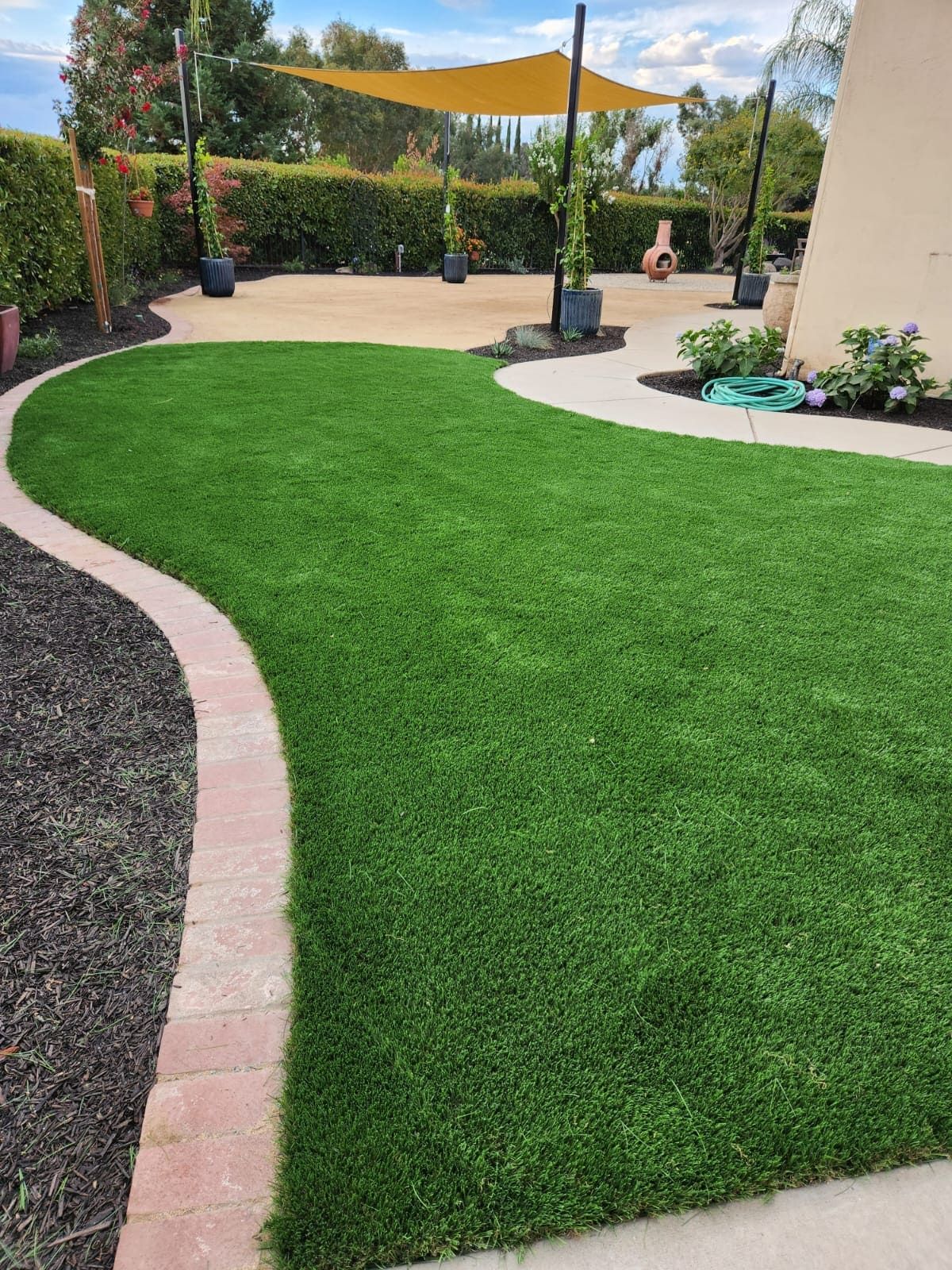
Replacing dead or struggling natural grass with artificial turf is consistently the single highest-impact backyard change available to Stockton homeowners, not because it is the cheapest option upfront, but because it addresses the most visible problem in most backyards while eliminating the ongoing cost of maintaining grass that was never going to thrive in this climate anyway.
The visual change from a patchy, yellow summer lawn to consistent, full green turf is immediate and dramatic. It is also permanent in a way that a lawn renovation is not. Resodding a Stockton backyard produces green grass for a season. Turf stays green through every August without irrigation, fertilizer, or re-seeding.
Budget-Smart Turf Approaches
- Start with the front yard or the main backyard area, not both at once. Prioritizing one zone gives you the full visual impact of the transformation in the space that matters most while keeping the initial investment contained. The second zone can follow once the first is complete.
- Combine turf with a smaller concrete slab rather than a large patio pour. A mid-sized concrete patio paired with turf on the remaining yard delivers a complete backyard look at a lower total cost than either a full concrete yard or a large patio plus full turf installation done simultaneously.
- Use concrete border edging rather than plastic bender board. Concrete edging costs more than plastic alternatives upfront but lasts indefinitely and looks significantly better. It holds the turf edge cleanly and eliminates the re-edging and replacement cost that cheaper edging materials require over time. On a budget, this is one place where spending slightly more pays off clearly in the long run.
What drives turf cost: Square footage is the primary variable. Yard shape affects material waste. The base preparation required depends on what is currently there, existing grass that needs to be removed, grading issues that need to be addressed, and soil conditions. Getting a detailed estimate that specifies what base work is included is how you compare quotes accurately rather than just comparing bottom-line numbers.
Concrete: Targeted Hardscape Over Full Coverage
Full concrete coverage across a backyard is not a budget approach. Targeted concrete work is.
The most cost-effective concrete projects in a Stockton backyard are the ones that create structure and definition without requiring a large pour. Here are the specific applications that deliver the most value at a contained cost.
Concrete Stepping Slabs or Pavers Set in Turf or Rock
Setting individual concrete slabs into an artificial turf or decorative rock surface creates a finished, designed look at a fraction of the cost of a full poured patio. The slabs define a path, a seating area, or a transition zone between surfaces without the material cost of covering the full area in concrete.
This approach also produces one of the most visually distinctive backyard finishes available. A geometric grid of concrete slabs set in artificial turf reads as intentional and contemporary. A stepping stone path through a decorative rock garden reads as designed and complete. Neither requires a large pour to achieve the result.
A Functional Concrete Pad in the Right Location
If the goal is creating an outdoor entertaining space, a concrete pad sized for the furniture or equipment it needs to support, a dining table, a grill station, a hot tub, does its job at a lower cost than a full patio that extends beyond what is actually being used.
Right-sizing the concrete pour to the actual use case rather than covering the maximum possible area is the most straightforward way to manage concrete project cost without sacrificing function.
Concrete Border Edging Throughout
Concrete mowing borders and edging between lawn or turf zones, planting beds, and other surfaces are among the lowest-cost concrete applications and among the highest-impact in terms of how finished a yard looks. A yard where every material transition is defined by a clean concrete edge looks significantly more complete than the same materials without that definition.
If budget requires sequencing a backyard makeover across multiple phases, getting concrete edging in place early defines the plan and makes subsequent phases easier to install cleanly.
Rock and Mulch: Maximum Coverage, Minimum Cost
Decorative rock and mulch are the most cost-effective way to cover large areas of bare dirt or replace struggling grass in planting beds, border zones, and areas where foot traffic is low.
Decorative Rock for Permanent Ground Cover
Decorative rock installed over a weed barrier is the closest thing to a permanent, zero-maintenance ground cover available. It does not decompose, does not need to be replenished on a schedule, and looks consistent year-round without irrigation. In Stockton's climate, where maintaining any organic ground cover through summer requires effort, rock is often the practical choice for areas that are not primary lawn zones.
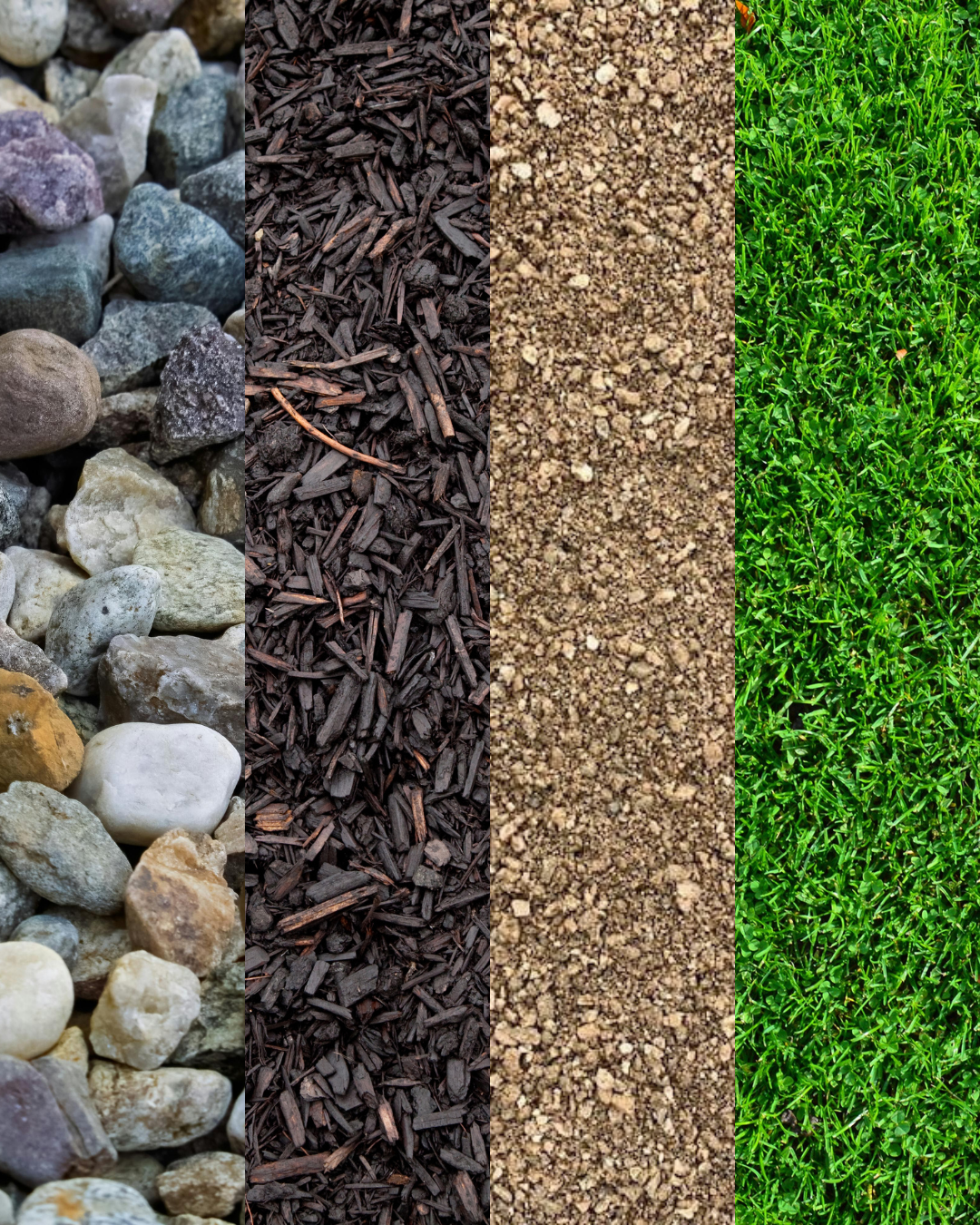
White pea gravel reads as clean and contemporary and works well in narrow zones like planting beds along the house foundation or side yard borders. River rock in medium sizes anchors larger open areas and resists wind migration better than smaller material. Decomposed granite works well in pathways and open zones where a natural, soft-surface look is the goal.
Budget tip: Rock and mulch projects cost significantly less when the area being covered is already relatively flat and does not require grading. If there are drainage or grading issues in the area, addressing those before placing ground cover is not optional, but it does add to the project scope and cost.
Mulch for Planting Beds
For planting beds with existing plants or areas where you plan to add plants, mulch is the right material. It retains soil moisture, regulates root temperature in Stockton's heat, and costs less per cubic yard than decorative rock on a material basis.
The ongoing replenishment cost is the trade-off. Budget for mulch as a recurring expense rather than a one-time installation cost and it remains a strong value choice for active planting areas.
Combining Both
The most effective budget approach for ground cover uses rock in permanent, no-plant zones and mulch in active planting beds. Rock along fence lines, under trees, and in border strips. Mulch in raised planters and foundation beds. Concrete edging defining every transition between them. This combination looks complete and cohesive while using each material where it performs best.
Shade: The Upgrade That Makes Everything Else Usable
In Stockton, a beautiful backyard that has no shade is a backyard that goes unused from noon to early evening, roughly five to six months of the year. Adding shade is not a luxury upgrade in the Central Valley. It is what turns an outdoor space into one that is actually used.
Budget Shade Options
- Shade sails are the lowest-cost option and can cover significant area at a relatively modest price. They are not permanent structures but provide meaningful shade and can be repositioned or removed seasonally. For a backyard that needs shade immediately while the budget for a more permanent structure builds, a shade sail is a practical interim solution.
- Aluminum pergolas cost more than shade sails but significantly less than custom wood structures and require no maintenance for the life of the structure. Aluminum does not rot, warp, or need painting. For a backyard where a defined shaded zone is a long-term design goal, an aluminum pergola installed over an existing or new concrete pad is the most cost-effective permanent option.
- Strategic planting for shade is the lowest-cost long-term approach but the slowest to take effect. Fast-growing trees like Chinese pistache and certain oak varieties are well-suited to Stockton's climate and provide increasing shade value each year. For homeowners with a longer time horizon and a lower initial budget, planting trees while implementing other phases of the backyard makeover is a compounding investment that pays off over years.
What drives pergola cost: Size, material, and complexity. A freestanding aluminum pergola over a defined area is straightforward. Adding decorative panels, electrical for lighting or fans, or integrating the structure with existing architecture adds to the scope. Starting with the functional structure and adding features later is a reasonable way to phase the cost.
Putting It Together: How to Phase a Budget Backyard Makeover
Very few backyard transformations happen in one shot, and they do not need to. The most successful budget makeovers we see are planned as two to three phases implemented over one to two years rather than attempted all at once with a compressed budget.
A practical phasing approach:
Phase 1: Address the biggest visual problem first. In most Stockton backyards, that is the lawn. Replacing dead or struggling grass with artificial turf in the main yard area, with concrete edging defining the perimeter, produces the most dramatic before-and-after result per dollar spent and makes every subsequent phase easier to plan around.
Phase 2: Add hardscape and ground cover. Once the turf is in and the main yard zone is defined, concrete stepping slabs, a functional concrete pad, and decorative rock in the border zones fill in the remaining surfaces. This phase completes the ground-level finish of the backyard without the larger investment of a full patio pour.
Phase 3: Add shade and finishing elements. A pergola or shade structure over the entertaining area, additional concrete edging details, and any planting or landscape accents that complete the design. By this phase, the major material costs are behind you and the finishing touches bring the full picture together.
The advantage of planning phases in advance rather than making decisions reactively is that each phase is installed with the next one in mind. Concrete edging placed in Phase 1 accounts for where rock borders will go in Phase 2. A concrete pad poured in Phase 2 is positioned and sized for the pergola that comes in Phase 3.
What to Ask Before You Get a Quote
A few questions that help you compare backyard makeover quotes accurately on a budget:
What exactly is included in the base preparation? This is where the cost difference between quotes often lives. One contractor may include grading, compaction, and weed barrier in their price. Another may include only the material installation. Comparing just the bottom-line numbers without knowing what each quote includes leads to surprises after the work starts.
What is the material spec? Turf product grade, rock type and size, concrete thickness and PSI, edging material. Knowing what you are actually getting for the price makes the comparison meaningful.
What does the finished edge look like? Ask to see examples of how each contractor finishes the transitions between turf, concrete, and rock. Edge detail is visible in every photo of a finished yard and is one of the clearest indicators of installation quality.
Can this be phased? A contractor who is willing to plan a phased project and give you a quote for each phase is giving you more flexibility than one who only works on full-scope projects. Not every contractor will accommodate phasing, and knowing this upfront helps you plan the budget realistically.
Get a Free Backyard Estimate in Stockton
If you are trying to figure out where to start and what sequence makes the most sense for your budget and your yard, we can walk the property with you and put together a phased plan that works with what you have to spend now and what you want to build toward.
Drago Inc. serves Stockton, Manteca, Tracy, Lodi, Lathrop, and surrounding communities throughout San Joaquin County. Licensed (CSLB #1017023) and insured.
Call us at (209) 871-8110 or request a free estimate online.
Frequently Asked Questions
-
What is the cheapest way to redo a backyard in Stockton?
The most cost-effective starting point depends on what the biggest problem in the yard is. For yards with struggling grass, replacing the main lawn area with artificial turf and adding concrete edging delivers the highest visual impact per dollar spent. For yards that are mostly bare dirt, decorative rock over a weed barrier with concrete border edging is the lowest-cost complete ground cover solution. For yards that already have a decent structure but feel unfinished, concrete edging and targeted ground cover in the border zones can significantly change the overall appearance at a relatively modest cost.
-
How do I prioritize a backyard makeover on a limited budget?
Address the most visible problem first. In Stockton backyards, that is almost always the lawn or ground cover. Once the main ground surface is resolved, add hardscape and then shade. Planning the full vision in advance, even if it takes two to three years to execute, ensures each phase is installed with the next one in mind rather than having to undo or modify earlier work to accommodate what comes later.
-
Is artificial turf a good budget investment for Stockton backyards?
The upfront cost of artificial turf is higher than sod or rock. The total cost over ten to fifteen years is typically lower in Stockton's climate because it eliminates ongoing irrigation, lawn care, and seasonal restoration costs that natural grass requires to survive the Central Valley summer. For homeowners who plan to be in their home for several years, turf is a strong long-term value even on a budget.
-
Can I do a backyard makeover in phases?
Yes, and for most budget-conscious projects, phasing is the right approach. The key is planning the full scope in advance so each phase is installed with the subsequent ones in mind. Concrete edging placed in the first phase should account for where rock borders and turf edges will go in later phases. A phased approach that is planned holistically costs less in total than one where each phase is figured out independently.
-
What ground cover is best for a budget Stockton backyard?
Decomposed granite and decorative rock are the lowest-cost permanent ground cover options for large areas. Mulch is less expensive on a material basis but needs replenishing every two to three years. Artificial turf costs more upfront but eliminates the ongoing costs of any material that needs replacement or irrigation. The right choice depends on whether the area has active planting, how much foot traffic it sees, and what the long-term maintenance budget looks like.
-
Does landscaping add value to a home in Stockton?
Consistently maintained, low-maintenance landscaping adds meaningful curb appeal and market value in the Stockton area. Buyers in California factor in ongoing water and maintenance costs, and yards that require minimal upkeep are attractive in a market where drought restrictions and water costs are ongoing concerns. A finished backyard with turf, concrete, and defined edging is a selling point relative to a neglected or maintenance-heavy yard.